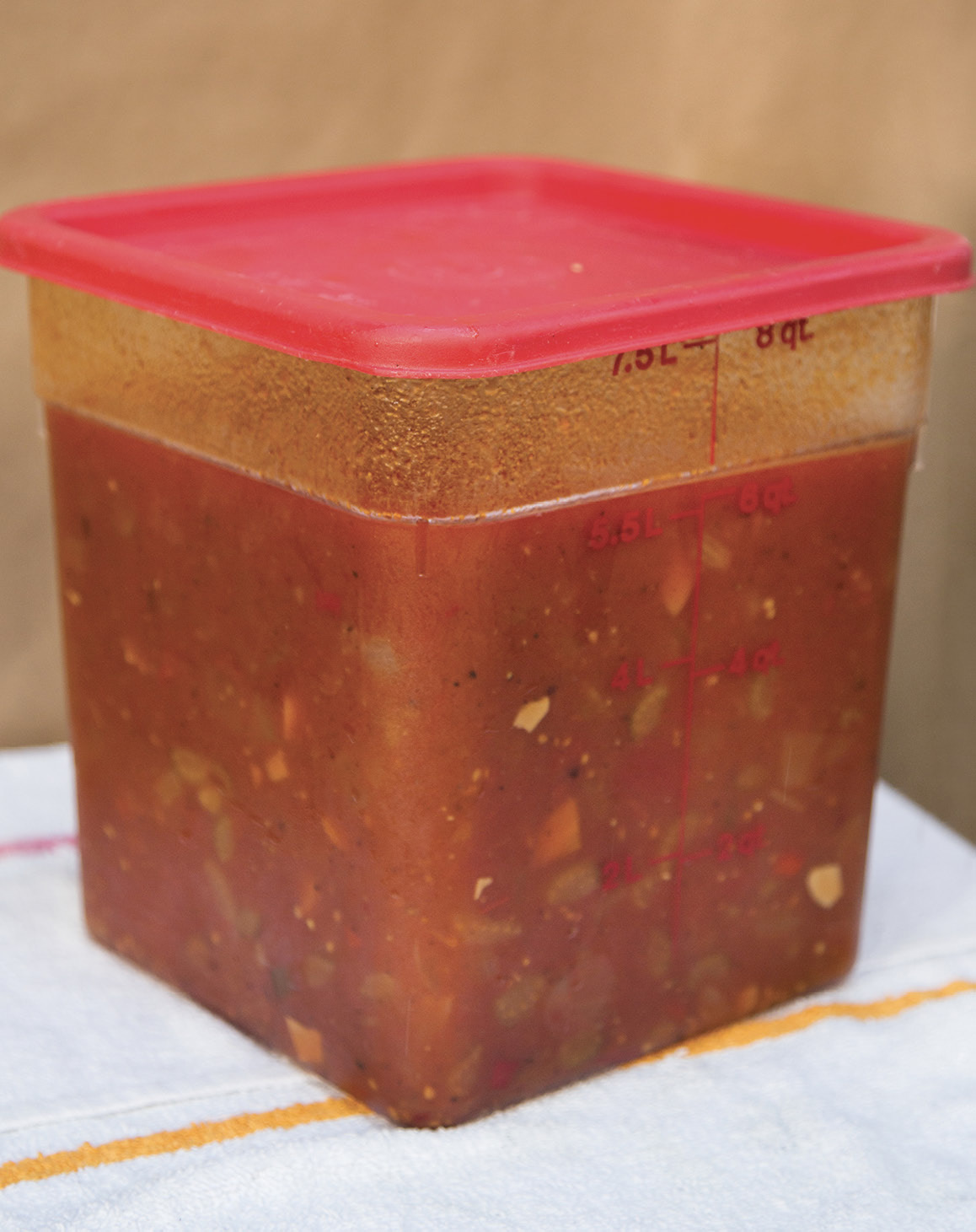
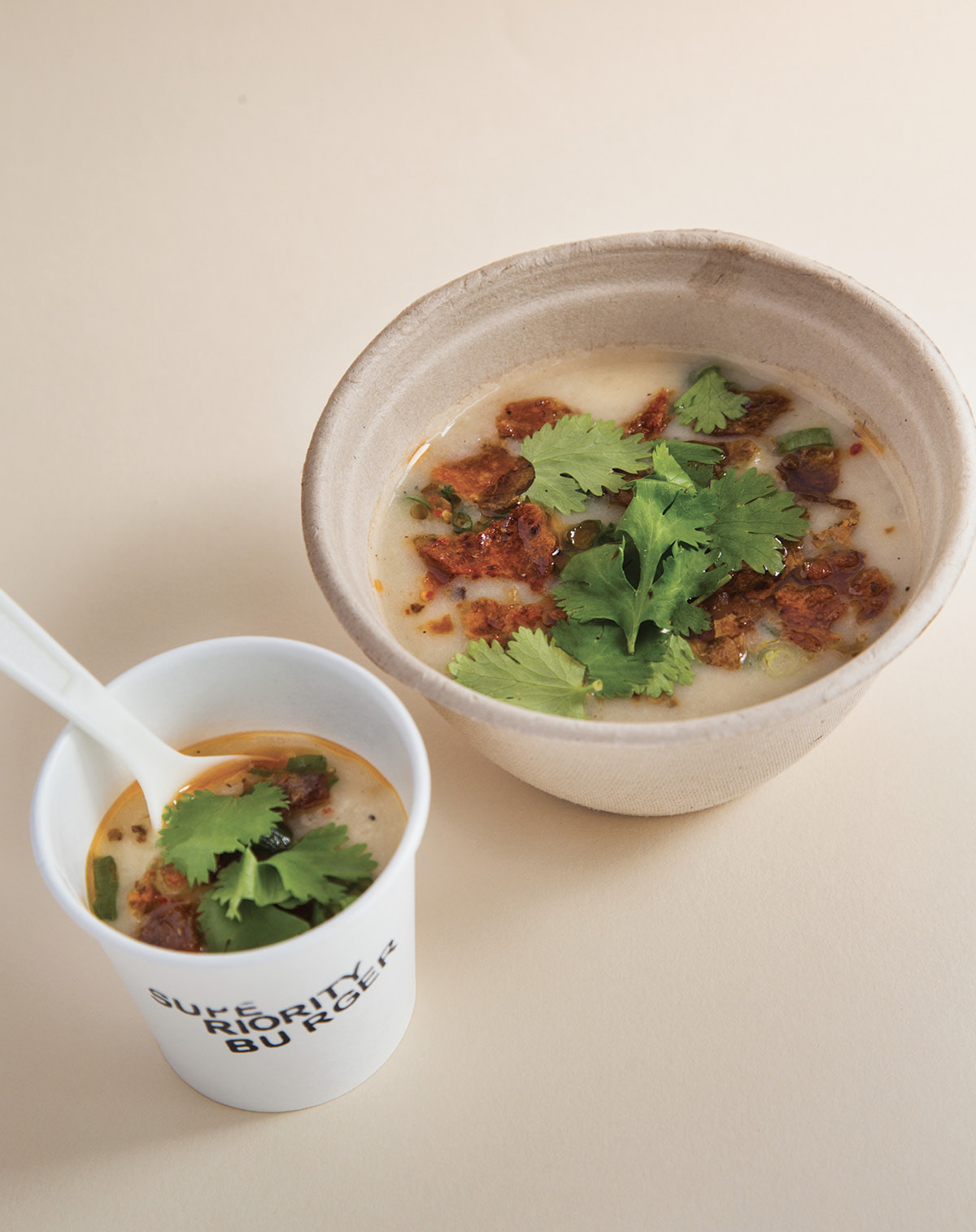
We run this soup almost every day from early November until it gets too balmy for broths and stews in the spring. Use a starchy russet potato, nothing too fancy or waxy. A food mill is key for the texture on this. And no, we don’t know why this uni-tasking tool is so expensive, either. A blender will turn this from magical into a gluey mess. Keep your potato skins extra crisp and hand-crush them right on top before serving, their presence an amplitude of tubery spudness.
Serves 4
POTATO SKINS
6 russet potatoes
Extra virgin olive oil
Korean chile flakes
2 tablespoons extra virgin olive oil
2 medium yellow onions, cut into small dice
4 garlic cloves, minced
One 4-inch piece fresh ginger, peeled and minced
6 large russet potatoes, peeled and cut into 1-inch pieces
1½ cups full-fat coconut milk
2 tablespoons maple syrup
Hot chile oil (page 205)
Lemon
Fresh cilantro, chopped
Scallion, chopped
Preheat the oven to 400ºF.
For the potato skins, bake the potatoes until they can easily be pierced with a fork, about 1 hour. Scoop out the flesh and reserve for another use. Massage the skins with olive oil and season with salt, pepper, and chile flakes. Bake the skins until crisped, 8 to 15 minutes.
In a big soup pot over medium-high heat, heat the olive oil until shimmering. Add the onions and a big pinch of salt. Cook, stirring frequently, until the onions are soft and begin to take on color, about 10 minutes. If the bottom of the pot gets too dark, add some water and scrape up the brown stuff. Add the garlic and ginger and cook until aromatic and they start to soften, 3 to 4 minutes. Add the potatoes to the pot and add enough water to cover the potatoes. Bring to a boil. Lower the heat and cook until the potatoes are fall-apart done. Add the coconut milk and maple syrup and season aggressively with salt and pepper. Pass everything through a food mill (or use an immersion blender just a little bit) but not a blender (will turn the mixture gluey). Serve really hot with chile oil, a squeeze of lemon, cilantro, scallions, and the crunchy potato skins.

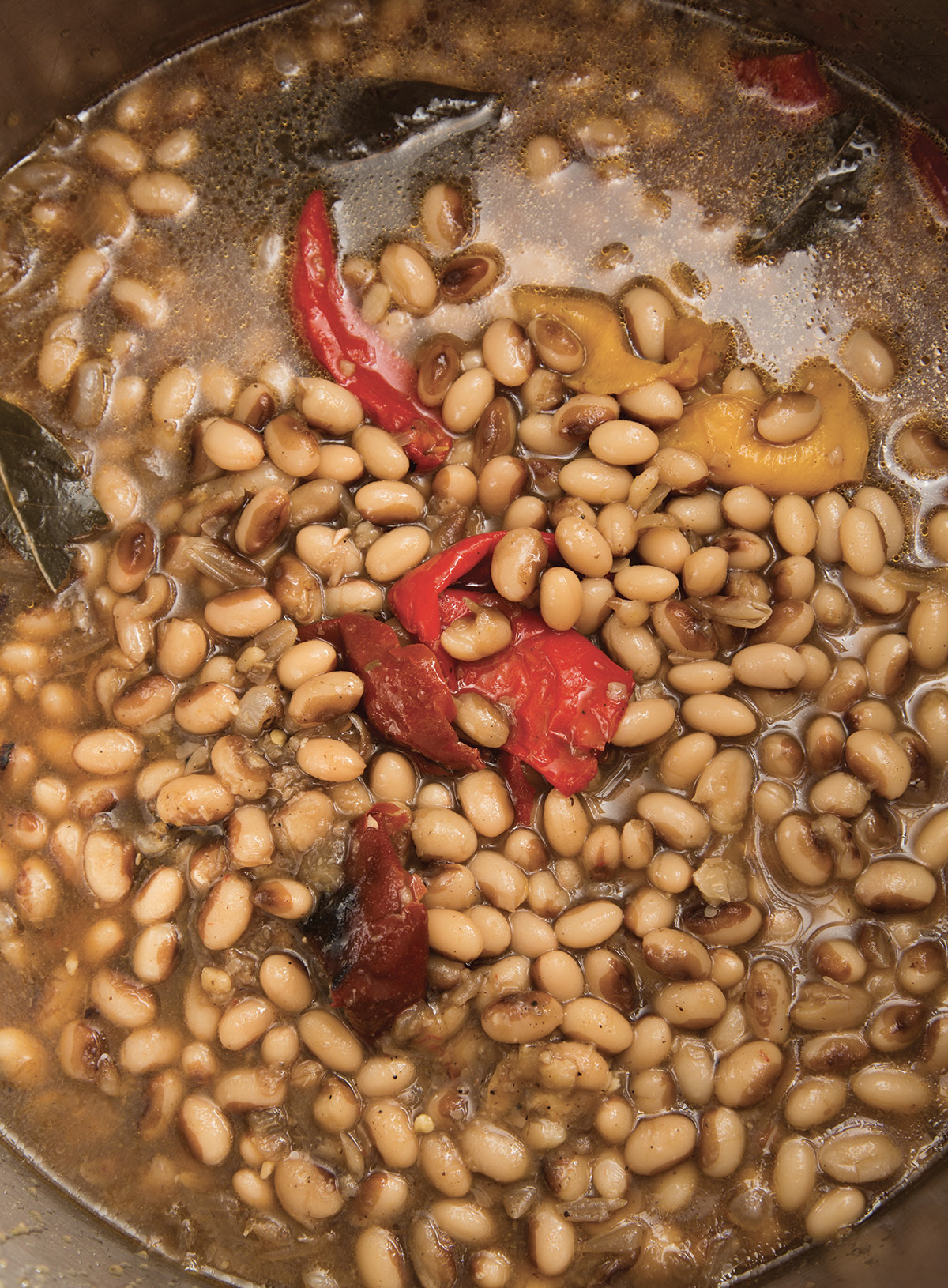
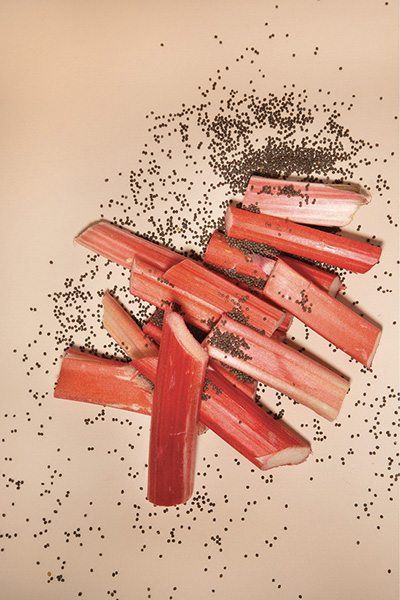
Cauliflower soup is cauliflower soup. It’s nothing terribly exciting, but it makes for a terrific base to showcase something cool and weird that can’t be served in a huge portion. And besides, why does everything have to be the greatest thing you have ever eaten in your life? Relax. The rhubarb mostarda garnish is the real headliner. We like to use brown mustard seeds to highlight the pink and brown-ness of the chutney. Warm up your pureed soup and spoon the cold rhubarb mix right on top. Eat quickly for the dual temperature rush.
Serves 4
2 heads cauliflower, roughly chopped
Extra virgin olive oil
2 medium yellow onions, cut into small dice
2 celery stalks, cut into small dice
2 garlic cloves, minced
Rhubarb Mostarda (recipe follows)
Preheat the oven to 450ºF.
Toss the cauliflower with olive oil, salt, and pepper. Distribute the cauliflower over two baking sheets so the cauliflower is in a single layer and the pieces have a little space between them. Roast in the oven until well browned, 15 to 20 minutes.
Meanwhile, heat olive oil in a sturdy soup pot over medium-high heat. Add the onions and celery and a big pinch of salt and cook until the onions start to brown and the celery softens, 15 to 20 minutes. Add some water if things are getting too brown. Lower the heat and add the garlic. Cook until the garlic softens a bit. Add the roasted cauliflower to the pot and enough water or broth to just cover. Bring to a boil and let cook for about 15 minutes, just so the flavors will come together. Season with salt and pepper and puree in a blender or with an immersion blender until very, very smooth. Serve with a dollop of rhubarb mostarda. This soup is a good way to use up leftover roasted cauliflower you may have in your refrigerator.
Makes about 2 cups
1 pound rhubarb, cut into ¼-inch pieces
½ cup golden raisins, roughly chopped
¼ cup raw sugar
1 tablespoon brown mustard seeds
1 teaspoon Dijon mustard
½ teaspoon dry mustard
¼ cup sherry vinegar
¼ cup water
1½ teaspoons kosher salt
Combine half of the rhubarb, the raisins, sugar, mustard seeds, Dijon mustard, dry mustard, sherry vinegar, and water in a medium saucepan. Bring to a boil over medium-high heat, then reduce to a simmer and let cook until the mixture becomes jammy and the rhubarb has broken down mostly, about 15 minutes. Take the pan off the heat and add the other half of the cut rhubarb. Let the chutney cool a little before using—it will thicken and the flavors will meld together.
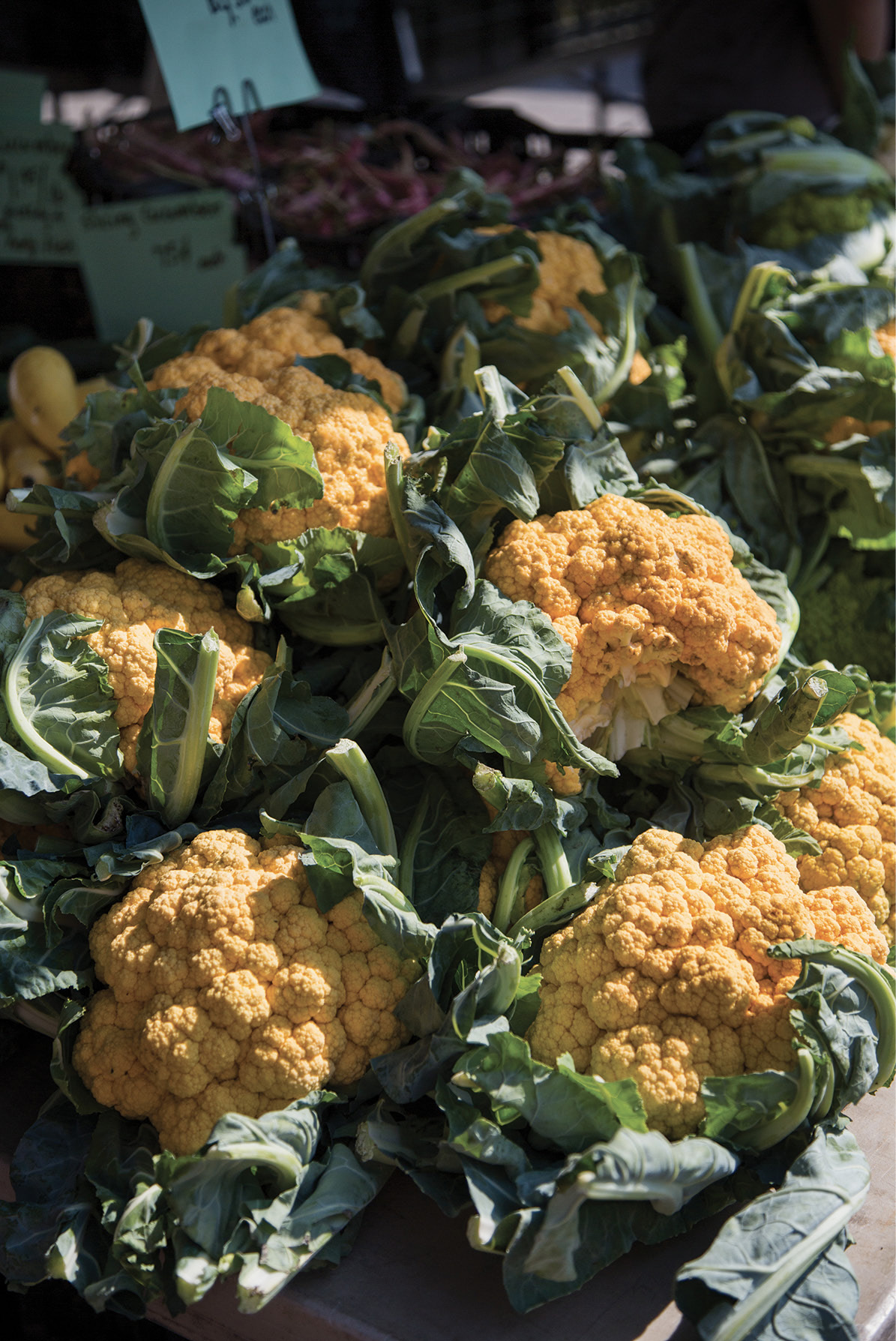
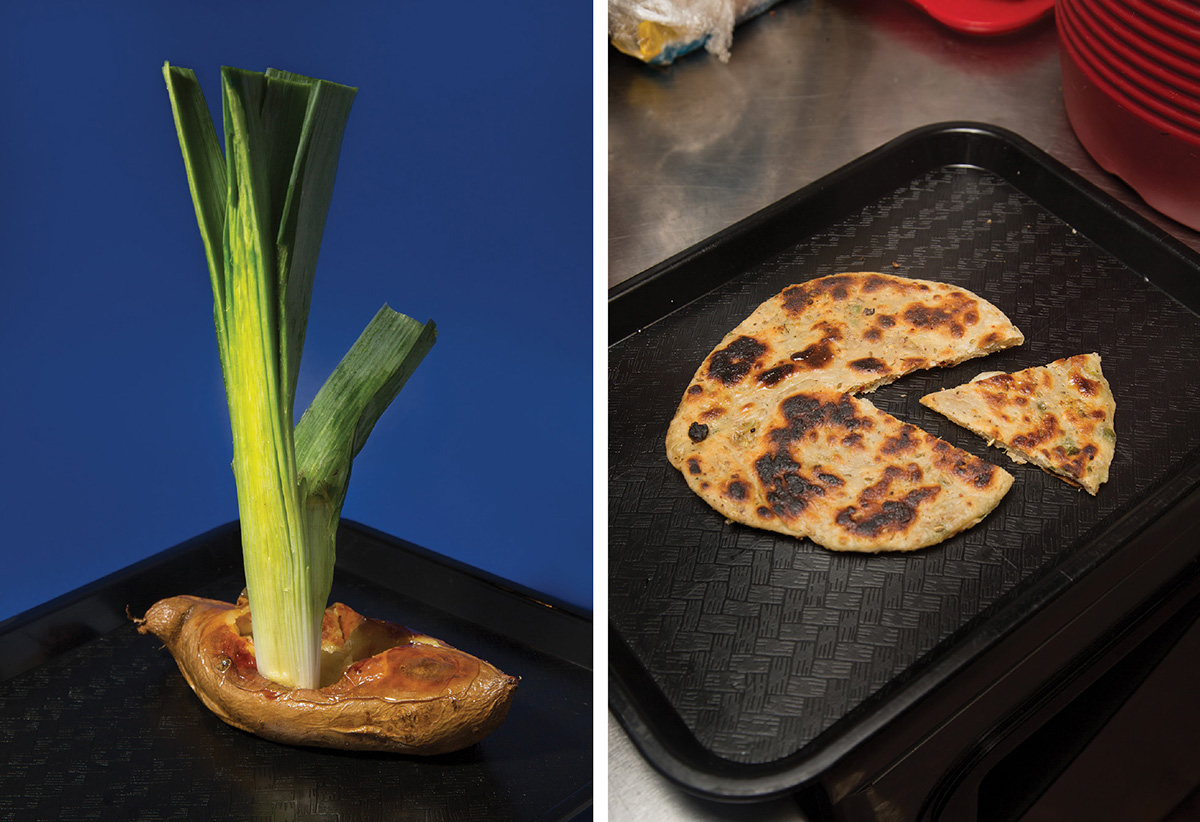
WHITE SWEET POTATO AND LEEK SOUP
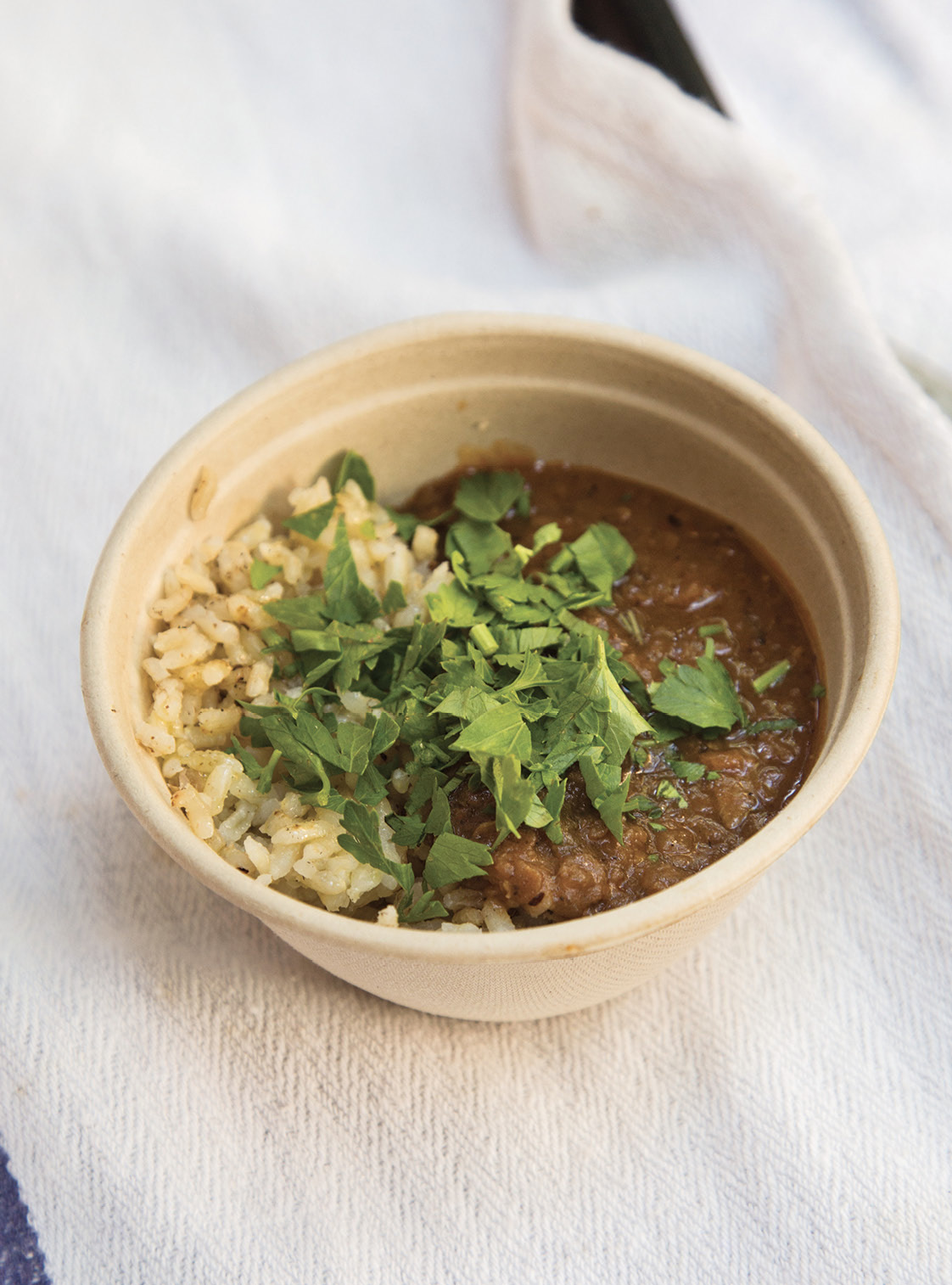
One pot, just a few ingredients. Genetically related to vichyssoise but served hot, because cold potatoes of any color are good for nothing. We serve it with a wedge of Italian green onion pancake, which is basically a scallion pancake seasoned like Italian food.
Serves 4
Extra virgin olive oil
2 cups chopped leeks (washed well)
2 garlic cloves, minced
2 pounds white sweet potatoes, peeled and cut into 1/2-inch cubes
1 cup full-fat coconut milk
Fresh lemon juice
Freshly grated nutmeg
Heat olive oil in a deep soup pot over medium heat until shimmering. Add the leeks and some salt and cook until totally, meltingly soft and take on a little color, about 20 minutes. Add the garlic and cook a bit more. Add the sweet potatoes to the pot and enough water to cover. Bring it all to a boil, then reduce to a simmer until the potatoes are falling apart. Add the coconut milk and season again with salt and pepper. Puree it all with a blender or immersion blender or food mill. Season with lemon juice and a few gratings of fresh nutmeg. Serve hot.
Makes 4 pancakes
2 cups all-purpose flour
1 teaspoon kosher salt
1 cup boiling water
¼ cup plus 1 tablespoon extra virgin olive oil
2 cups thinly sliced scallions
2 tablespoons fennel seeds, toasted and crushed
1 tablespoon crushed red pepper flakes
2 teaspoons dried oregano
1 teaspoon freshly ground black pepper
¼ cup grapeseed oil
Put the flour and salt into the bowl of a food processor. With the food processor running, slowly add most of the water—about ¾ cup—and 1 tablespoon of the olive oil. Let the food processor run for about 15 seconds, and if the dough does not come together, add a little bit more water until it just does. Transfer the dough to a lightly floured surface and knead for a minute to make a smooth ball. Wrap in plastic wrap and let rest for 30 minutes at room temperature.
Mix together the fennel seeds, red pepper flakes, oregano, and black pepper in a small bowl. Divide the pancake dough into 4 pieces and roll each one into a smooth ball. Roll one ball out into a disk about 8 inches in diameter on a lightly floured surface. Spread a very thin layer of olive oil over the top of the disk either using your fingertips or a pastry brush. Roll the disk up like a jelly roll, then twist the roll into a tight spiral, tucking the end underneath. Flatten gently with the palm of your hand, then reroll into an 8-inch disk. These multiple twisting and rolling steps will create a flaky texture. Spread on another very thin layer of olive oil, sprinkle with a pinch of the fennel seed mixture, then sprinkle with ½ cup of the scallions. Roll it up like a jelly roll again. Twist into a spiral, flatten gently, and reroll into a 7-inch disk. Repeat this whole process with the remaining balls of dough.
Heat the grapeseed oil in a nonstick skillet over medium-high heat until shimmering. Very carefully slide a pancake into the hot oil and cook for 2 minutes—gently shaking the pan if needed—until the underside is golden brown. Using tongs, carefully flip the pancake and cook for another 2 minutes until the other side is golden brown. Place the pancake on a baking sheet lined with paper towels and sprinkle generously with salt. Repeat the frying process with the other pancakes. Slice each pancake into 4 wedges and serve immediately.
We have fond memories of hanging out at the many Ethiopian and Eritrean restaurants of Washington, DC, and scooping up mesir wat/tsebi mesir (red lentil stew) with flaps of torn injera. This stew is our tribute to this killer dish but made with Mediterranean flavors since Superiority Burger is really just an Italian restaurant disguised as a tiny veggie burger joint. Nothing effete here though; the lentils get packed side by side along with brown rice and a fistful of hacked parsley. One twist of the spoon and the whole thing collapses into a stewy mess.
Serves 4
Extra virgin olive oil
2 medium yellow onions, finely chopped
2 celery stalks, finely chopped
1 carrot, finely chopped
2 tablespoons tomato paste
Red wine vinegar
6 garlic cloves, minced
3 fresh rosemary sprigs, leaves picked and finely chopped
1 bunch fresh thyme, leaves picked
2 cups red lentils, rinsed
6 cups water
Cooked brown rice (page 211)
Chopped fresh flat-leaf parsley
Heat some olive oil in a large soup pot over medium heat and add the onions, celery, carrot, and some salt. Cook until all the vegetables start to soften and take on a little color, about 20 minutes. Add the tomato paste and cook until it starts to brown. Deglaze with a splash of red wine vinegar. Add the garlic, rosemary, and thyme and cook until it becomes aromatic. Add the lentils and water and bring to a boil. Reduce the heat and let simmer until the lentils are fully cooked and the sauce thickens. Season with more salt and some pepper. Serve over a scoop of brown rice with chopped parsley and a splash of red wine vinegar.
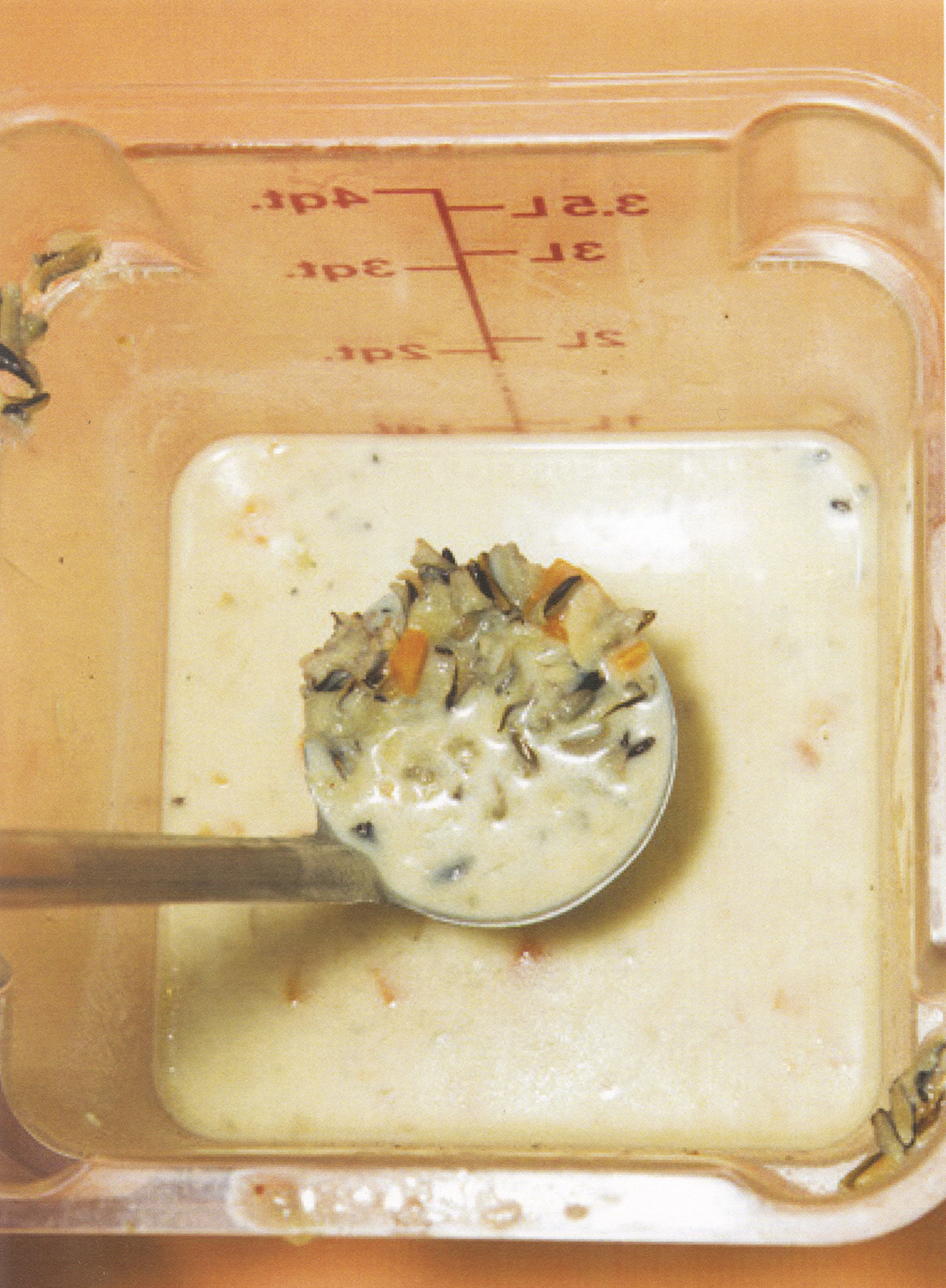
Before playing around with this soup, our wild rice (Canada rice?) experience was mostly vague remembrances of foil-wrapped Pyrex casseroles from 80s potlucks. Before you add the cashew cream and olive oil, this cooks into a murky gray brodo rife with blown-out husks of also gray wild rice. It’s kind of like faux mushroom-barley soup, unnecessarily so, as it contains neither.
Serves 6
1 cup unsalted cashews, roasted
2 tablespoons extra virgin olive oil
2 large Spanish onions, cut into small dice
3 carrots, cut into small dice
3 celery stalks, cut into small dice
4 garlic cloves, minced
½ cup all-purpose flour
½ cup dry white wine
12 cups vegetable broth or water
1½ cups wild rice
3 fresh thyme sprigs, leaves picked
Chopped fresh flat-leaf parsley
Grilled bread
Soak the cashews overnight in plenty of water. Drain and blend in a high-powered blender. Gradually add water while the blender is running until the mixture has the consistency of heavy cream. This should give you about 2 cups of cashew cream.
Heat the olive oil in a deep soup pot over medium-high heat. Add the onions and a large pinch of salt and cook, stirring frequently, until the onions begin to brown and soften, about 10 minutes. Add the carrots, celery, and garlic to the pot, reduce the heat to medium-low, and cook on low heat until the vegetables are totally soft, about 20 minutes. Add the flour and cook, stirring constantly, for a couple minutes to ensure it loses its raw flavor. Add the white wine and let most of the alcohol cook off. Add the broth and rice to the pot and bring to a boil. Once the liquid is boiling, reduce the heat and let simmer until the rice is tender, about 25 minutes. Turn off the heat and add the thyme leaves. Add 1 to 2 cups of the cashew cream, depending on how creamy you want the soup to be. Season with more salt and some pepper. Serve topped with a little bit of chopped parsley and a piece of grilled bread on the side.
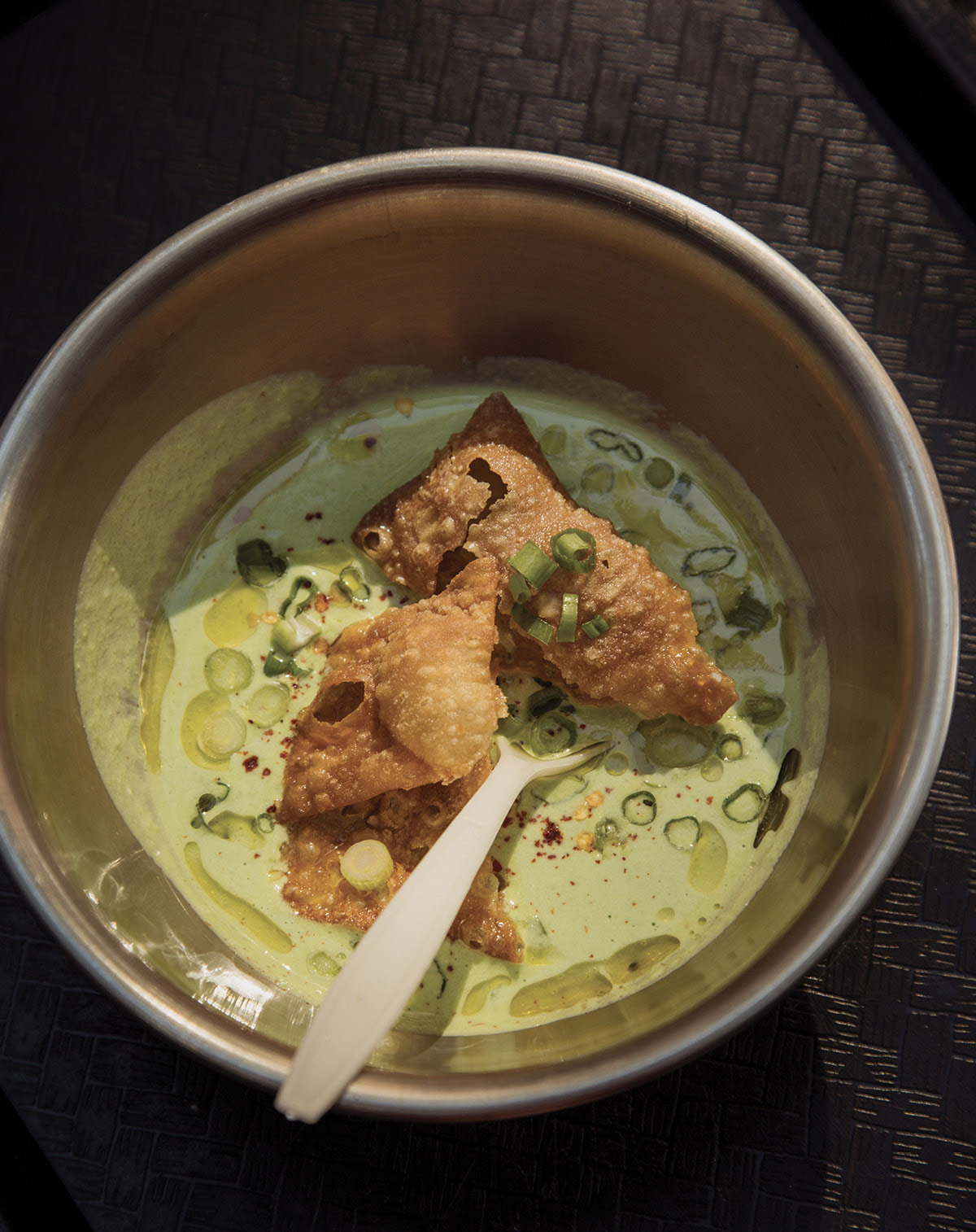
Frozen fava beans are fine to use for this soup. Fresh favas shouldn’t get hammered like this—it would be a shame, after putting in all that time and effort hulling and peeling. Our favorite way to garnish this soup is with a squirt of malt vinegar, a few shredded scallions, and, time permitting, wonton skins that are shallow-fried until bubbly and then dusted with malt vinegar powder and plenty of salt.
Serves 6
¼ cup extra virgin olive oil
2 medium yellow onions, finely chopped
2 celery stalks, finely chopped
4 garlic cloves, thinly sliced
2 cups raw cashews
2 tablespoons raw sugar
1 teaspoon crushed red pepper flakes
3 cups water
2 pounds frozen fava beans, thawed a little
1 tablespoon malt vinegar
2 scallions, thinly sliced
Fried Salt-and-Vinegar Wonton Wrappers (see page 205; optional)
Heat the olive oil in a large saucepan over medium-low heat. Add the onions, celery, and garlic and cook, stirring often and adding a splash or so of water if the bottom of the pan gets too brown, until golden brown, 30 to 40 minutes. Season with salt and black pepper. Add the cashews, sugar, red pepper flakes, and water and bring the mixture to a simmer. Cook until the vegetables are very soft and losing their structure, 10 to 15 minutes.
Blend one-third of the fava beans with one-third of the vegetable mixture in a blender, adding some cooking liquid from the vegetable mixture as needed to thin, until very smooth, about 2 minutes. Press the puree through a fine-mesh strainer into a medium saucepan; discard the solids. Working in two batches, repeat with the remaining favas and vegetable mixture, adding water as needed if you run out of cooking liquid. If the soup is still very thick, thin it with water until you get a velvety, pourable consistency. Stir the malt vinegar into the soup. Season with more salt and black pepper and warm over medium-low until heated through.
Serve immediately, topped with scallions and fried wontons, if you like.
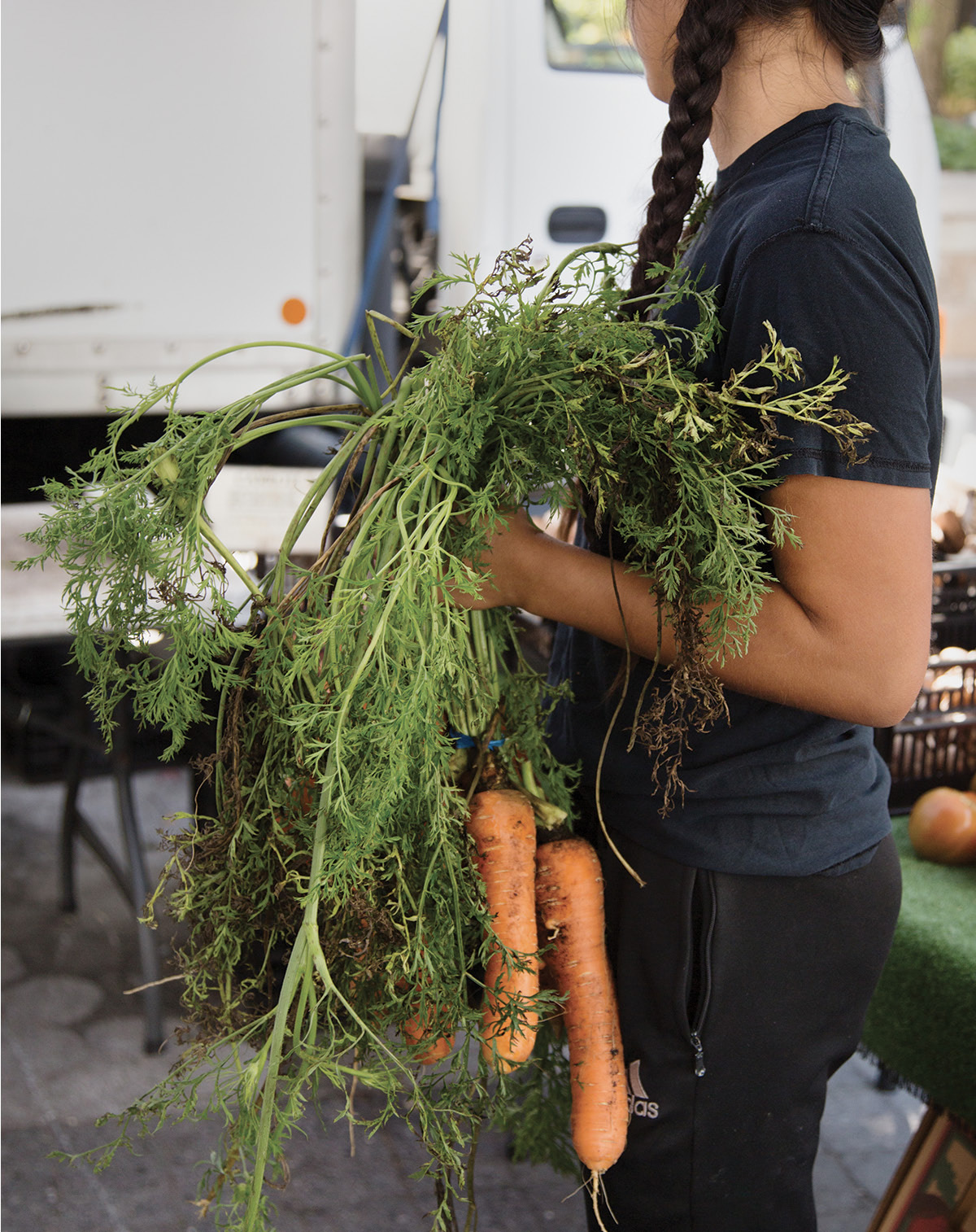
CARROT SOUP WITH MINT AND PEANUTS
This soup tastes better at room temperature. Too hot and the flavor is muted, not as carrot-ful as it is at, say, 65 degrees. That’s a difficult temperature to maintain, so we recommend making, garnishing, and eating it right away, washing all the dishes, turning out the lights, closing the kitchen for the day, all in one shot.
Serves 6
2 pounds carrots, cut into ½-inch coins
1 jalapeño chile, cut into ½-inch rings
Grapeseed oil
2 medium yellow onions, finely chopped
4 garlic cloves, thinly sliced
4 cups water
¼ cup white miso paste
2 cups carrot juice
½ cup fresh mint, roughly chopped
2 cups pea shoots
Juice of ½ lemon
½ cup full-fat coconut milk
1 cup unsalted peanuts, toasted and chopped
Preheat the oven to 425ºF. Lightly grease a baking sheet.
Place half of the carrots in a medium bowl and toss with the jalapeño, 2 tablespoons grapeseed oil, and salt and black pepper. Transfer to the baking sheet and roast until the carrots are well browned and tender, about 20 minutes.
While the carrots are in the oven, heat a few more tablespoons oil in a large deep soup pot over medium-high heat. Add the onions and a pinch of salt. Let the onions cook, stirring frequently, until they start to brown and are fully translucent, 8 to 10 minutes. Add the garlic and cook for a minute more. Add the water to the pot along with the remaining carrots and bring to a boil over high heat. By now, the roasted carrots and jalapeño should be done. Add these to the pot as well. Cook until the raw carrots are tender, about 30 minutes. Stir in the miso paste. Puree the soup in batches in a blender—adding a little carrot juice each time—until it is velvety smooth. Transfer the soup back into the pot until ready to serve. If the soup seems too thick, add a little more carrot juice. When you are ready to eat, toss the mint, pea shoots, and lemon juice in a medium bowl to combine. Season with salt and black pepper. Ladle the soup into bowls and top with a small drizzle of the coconut milk, the chopped peanuts, and a mound of the pea shoot-mint salad. This soup actually tastes best not piping hot—we recommend eating it at ambient temperature.
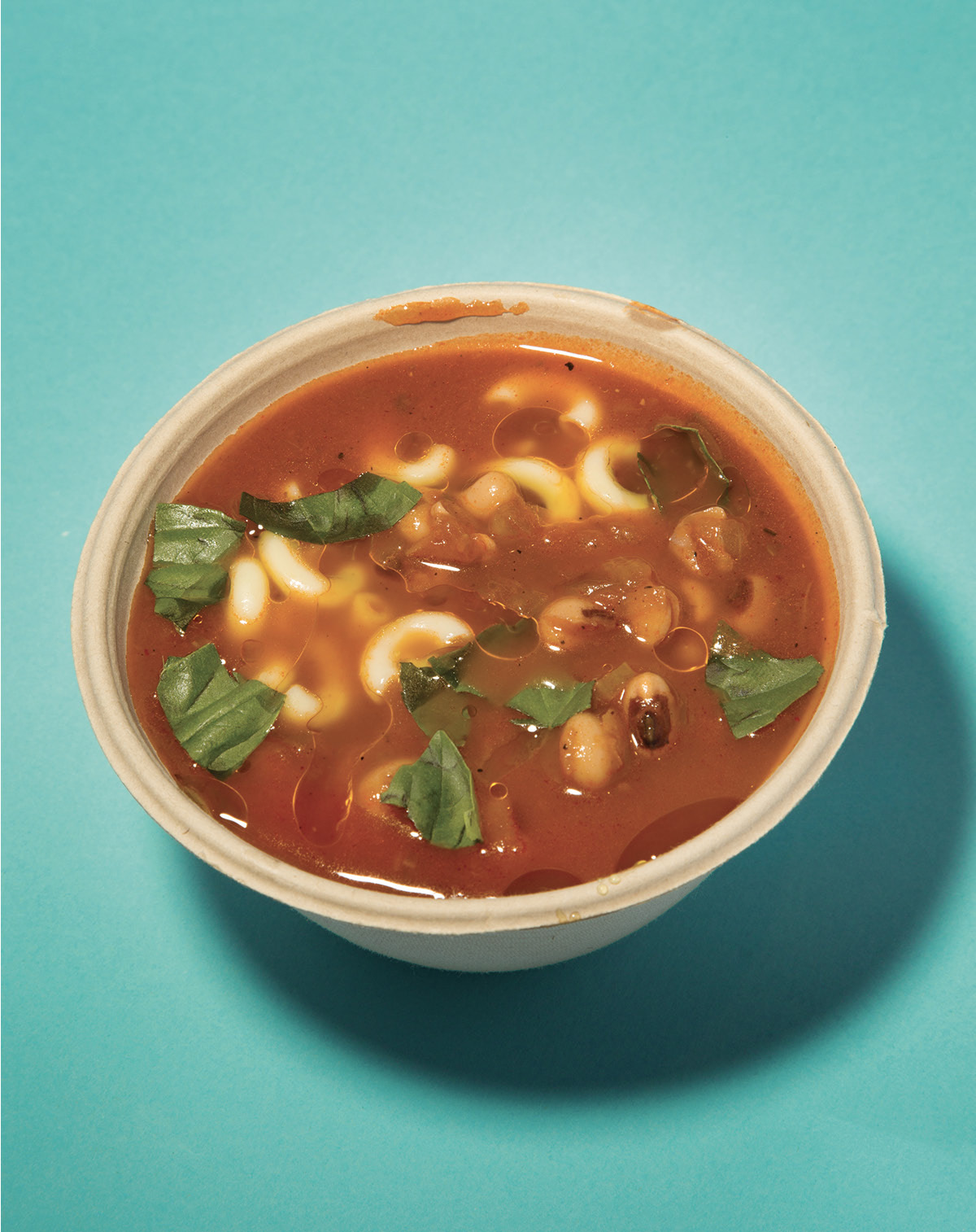
TOMATO-STAINED BLACK-EYED PEA SOUP WITH ELBOWS
The stakes were considerably high on this one as it involved us trying to rip off a classic Italian cacciucco without using any of the aquatic items that make that classic soup taste like it does. We originally served this with a handful of De Cecco ditalini pasta floating on top, but pulled the elbow macaroni switcheroo, because, let’s be honest here, elbows are the queen of pasta.
Serves 6
2 tablespoons extra virgin olive oil
2 Spanish onions, cut into small dice
4 celery stalks, cut into small dice
6 garlic cloves, sliced paper thin
2 tablespoons tomato paste
¼ cup red wine vinegar
1 fresh rosemary sprig, leaves picked and minced
One 28-ounce can crushed tomatoes
3 cups dried black-eyed peas
1 to 2 tablespoons raw sugar
2 cups slightly undercooked elbow macaroni
Fresh basil leaves
Crushed red pepper flakes (optional)
Heat the olive oil in a large deep soup pot over medium heat. Add the onions and celery and a big pinch of salt and cook, stirring regularly, until totally soft and starting to take on some color, 10 to 12 minutes. Add the garlic and cook until the pieces become translucent, about 5 more minutes. Add the tomato paste—now stir more frequently—and cook until it goes from bright red to a more brick-red (red-brown) color, about 10 minutes. Add the red wine vinegar and use a spoon to scrape any of the stuck bits from the bottom of the pot. Add the rosemary, crushed tomatoes, black-eyed peas, and enough water to cover the peas by about 3 inches. Raise the heat and bring it all up to a boil. Reduce the heat to maintain a simmer and let it go until the peas are totally tender—this will take about an hour or so. The peas will release some starch that will thicken the broth a little—this is good! Check the seasoning for salt, black pepper, and sugar and adjust as needed. To serve, spoon the soup piping hot into a bowl and top with ¼ to ½ cup cooked elbow macaroni. Tear some basil leaves over the top of the pasta and add a pinch of red pepper flakes, if you like. Serve immediately, as the pasta will overcook in the hot broth.
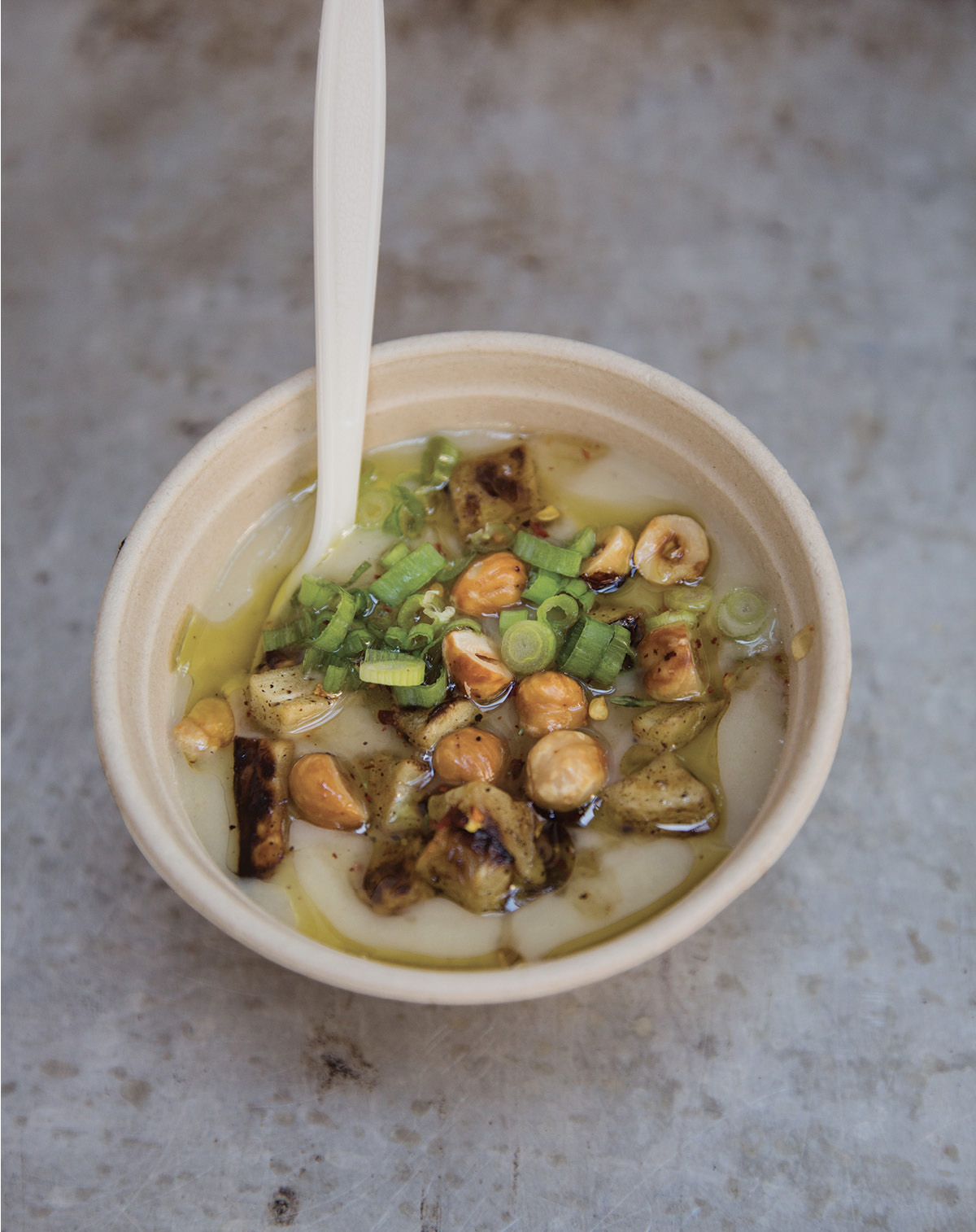
We make things slightly more difficult by making you start a soup base on the stove while at the same time firing up the oven to roast the chunks of parsnip. The roasting adds a depth of flavor that cannot be captured simply by allowing the roots to simmer in a broth. Reserve some of the roasted parsnip pieces to float on top and the reinforcement of flavor will be complete. The fennel imparts a vegetal licorice flavor that will be tempered by the parsnips, and, yes, chafe the tuchus of all the licorice haters.
Serves 6
¼ cup honey or maple syrup (for the vegan version)
1 teaspoon Korean chile flakes
½ teaspoon finely chopped fresh thyme leaves
8 cups peeled and medium-diced parsnips
Extra virgin olive oil
3 medium yellow onions, finely chopped
2 cloves garlic, finely sliced with a mandoline
½ cup dry white wine
2 teaspoons fresh thyme leaves, finely chopped
3 fennel bulbs, tough outer leaves removed, chopped
6 cups water
1 cup hazelnuts, toasted and crushed
4 scallions, thinly sliced
Combine the honey with the chile flakes and thyme in a bowl. Set aside.
Preheat the oven to 450ºF. Lightly grease a baking sheet.
Toss the parsnips with a few teaspoons of olive oil and spread into a single layer on the baking sheet. Roast until the parsnips are well caramelized and tender, about 25 minutes. Remove from the oven and set aside 1 cup of the cooked parsnips in a small bowl.
In a large deep soup pot, heat a few tablespoons of olive oil over medium-high heat. Add the onions along with a big pinch of salt and let them cook until they begin to brown and soften, about 12 minutes. Add the garlic and cook for a minute more, then add the white wine and let cook until the alcohol smell is gone, about 3 minutes. Add the chopped thyme, the rest of the sheet of roasted parsnips, the fennel, and water. Bring to a boil over high heat and then reduce to a simmer until the fennel is tender. Blend with an immersion blender in batches and transfer back into the soup pot. Check for seasoning and add salt and pepper as needed. When ready to serve, top each bowl of soup with a drizzle of the honey-thyme mixture, some of the reserved roasted parsnips, a sprinkle of the crushed hazelnuts, and the sliced scallions.
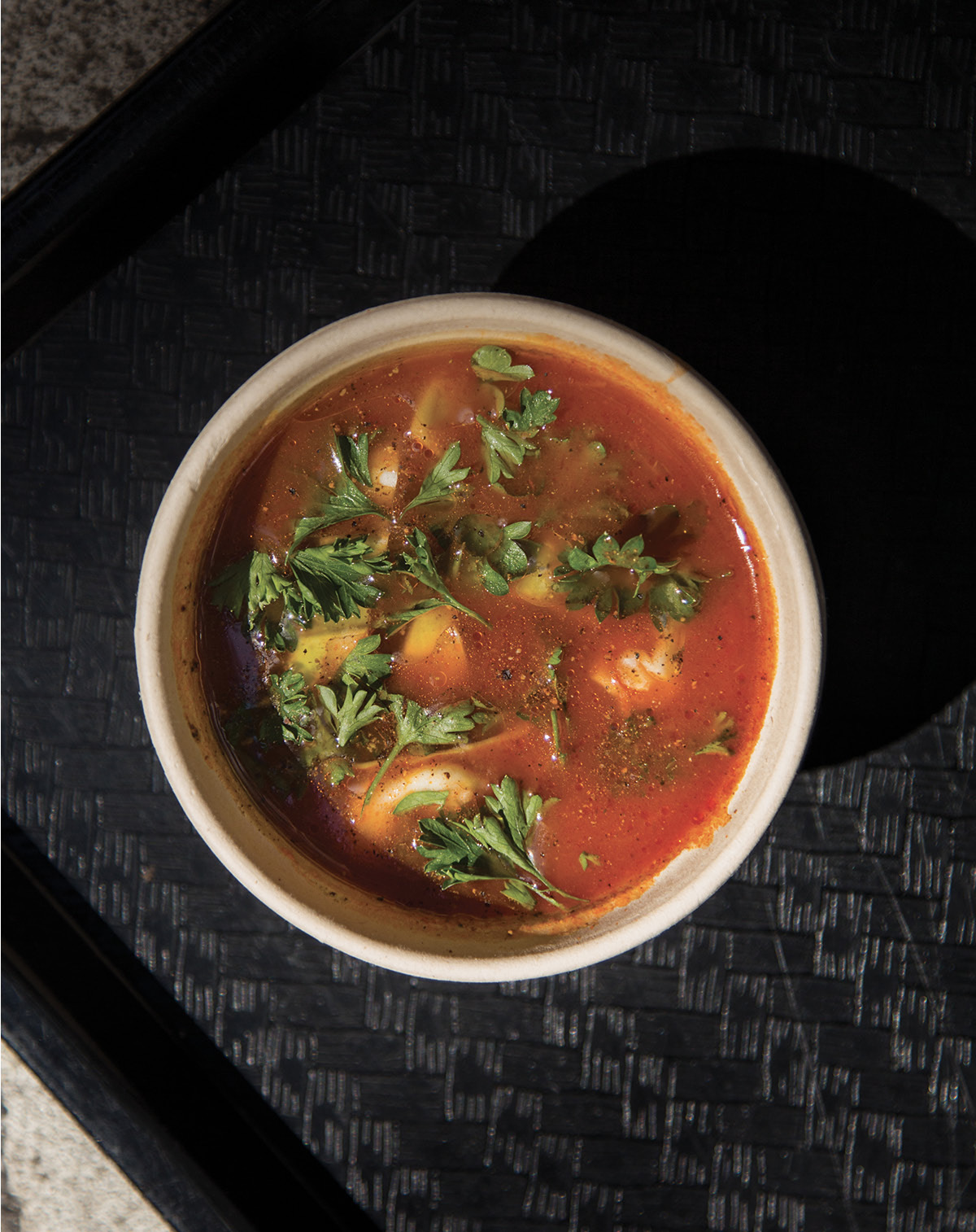
VEGETABLE SOUP WITH CURLY PARSLEY
The first time we made a batch of this we all stood around the back of the kitchen with decanted plastic pint containers and just slurped in silence. The layering of flavors and salting as you go, and the fried double-concentrated tomato paste, create about the most vibrant, exciting vegetable soup that we have ever had. Curly parsley is not essential, but deployed strategically around the rim and the visual red herring that this is just a boring old cup of broth gets throttled. Parsley has power.
Serves 6
Extra virgin olive oil
3 medium yellow onions, finely chopped
2 carrots, cut into small dice
3 celery stalks, cut into small dice
2 red bell peppers, cut into small dice
4 garlic cloves, minced
2 tablespoons tomato paste
½ cup dry white wine
6 cups water
½ head green cabbage, cut into ¼-inch ribbons
Red wine vinegar (optional)
1 bunch greens (kale or Swiss chard), stems removed, torn into small pieces
Fresh curly parsley
White Italian bread, toasted, drizzled with extra virgin olive oil, rubbed with a garlic clove, and sprinkled with salt
Heat a slick of olive oil in a large deep soup pot over medium-high heat. Add the onions and a big pinch of salt and cook, stirring frequently, until the onions are starting to brown and are translucent, about 10 minutes. Add the carrots, celery, and bell peppers to the pot and cook for about 8 minutes more. Add the garlic and tomato paste. Cook for at least 5 more minutes, until the tomato paste starts to brown and stick to the bottom of the pot. Add the white wine and scrape up any stuck bits from the pot. Add the water and another large pinch of salt and bring to a boil. Reduce the heat, add the cabbage, and let simmer, just until the cabbage starts to get soft, about 10 minutes. Check the seasoning for salt and acidity (add a little red wine vinegar if the soup tastes flat) and black pepper. When ready to eat, add the greens to the very hot soup and let them wilt and turn a vibrant green color. Serve with a scattering of curly parsley, and a slice of the toasted bread.
Table of contents
- Cover
- Title
- Contents
- Introduction
- A Few Notes on These Recipes
- Sandwiches
-
Cool Salads
- Burnt Broccoli Salad
- Tahini Ranch Romaine Salad
- Caraway Slaw
- Chicories Salad
- Green Brown Rice with Yellow Beets
- Chopped Salad
- Wedgeless Wedge Salad
- Home-Style Potato Salad
- Corn and Tomatoes with Bruised Basil and Olive Oil Croutons
- Ice-Cold Herbed Melon and Cucumber Salad
- Fennel and Celery Salad with Spicy Peanut Sauce
- Okra Rice Salad
- Roasted Cauliflower with Tamarind, Shiso, and Peanuts
- Raw Swiss Chard Salad
- Iced and Smashed Cucumber Salad
- Vegetable Salad
- Sweet-and-Sour Red Beets with Cream Cheese and Fried Pretzels
- Kohlrabi Slaw
- Wild Rice Salad with Candied Hibiscus
- Stuffed Cabbage Salad
- Half-Wilted Escarole with Corn Bread and Roasted Apricots
- Peas and Pesto
- Roasted Rutabaga with Brown Rice and Pomegranate Molasses
- Bitter Greens with Grapefruit, Re-Toasted Corn Chips, and Halloumi
-
Warm Vegetables
- Griddled Broccoli Rabe
- Stuffed Green Peppers with Coconut and Iceberg
- Crunchy Potatoes
- Bean Toast
- Beer Batter Market Pancakes
- Loaded White Sweet Potato
- Roasted Orange Sweet Potato with Olive-Raisin Chutney
- Salt-and-Vinegar String Beans
- Kelp and Vegetable Scampi
- BBQ Baked Gigante Beans with Polenta and Coleslaw
- BBQ Carrots with Cashew Cream and Corn Chips
- Confit Potatoes
- Braised Collard Greens with Hot Sauce and Honey
- Griddled Yuba with Snap Peas, Rhubarb, and Mint
- Tahini-Roasted Cauliflower with Tangerines and Hazelnuts
- Garlic-Braised Escarole with Apples and Thyme
- Fried Rice and Beans
- Soups and Stews
- Sweets
-
Pantry Recipes
- Pump Cheese
- Pickled Onions and Other Alliums
- Fried Salt-and-Vinegar Wonton Wrappers
- Chile Oil
- Pickled Golden Raisins
- Cashew Cream
- Hammered Mushrooms
- Polenta Planks
- Cheesy Brined Tofu
- Pastrami Tofu
- Crunchy Potatoes
- Confit Potatoes
- Marinated Yuba Strips
- Brown Rice
- Corn Bread
- Chickpea Mayo
- Special Sauce
- Spicy Mayo
- Acknowledgments
- Glossary
- Index
- Copyright