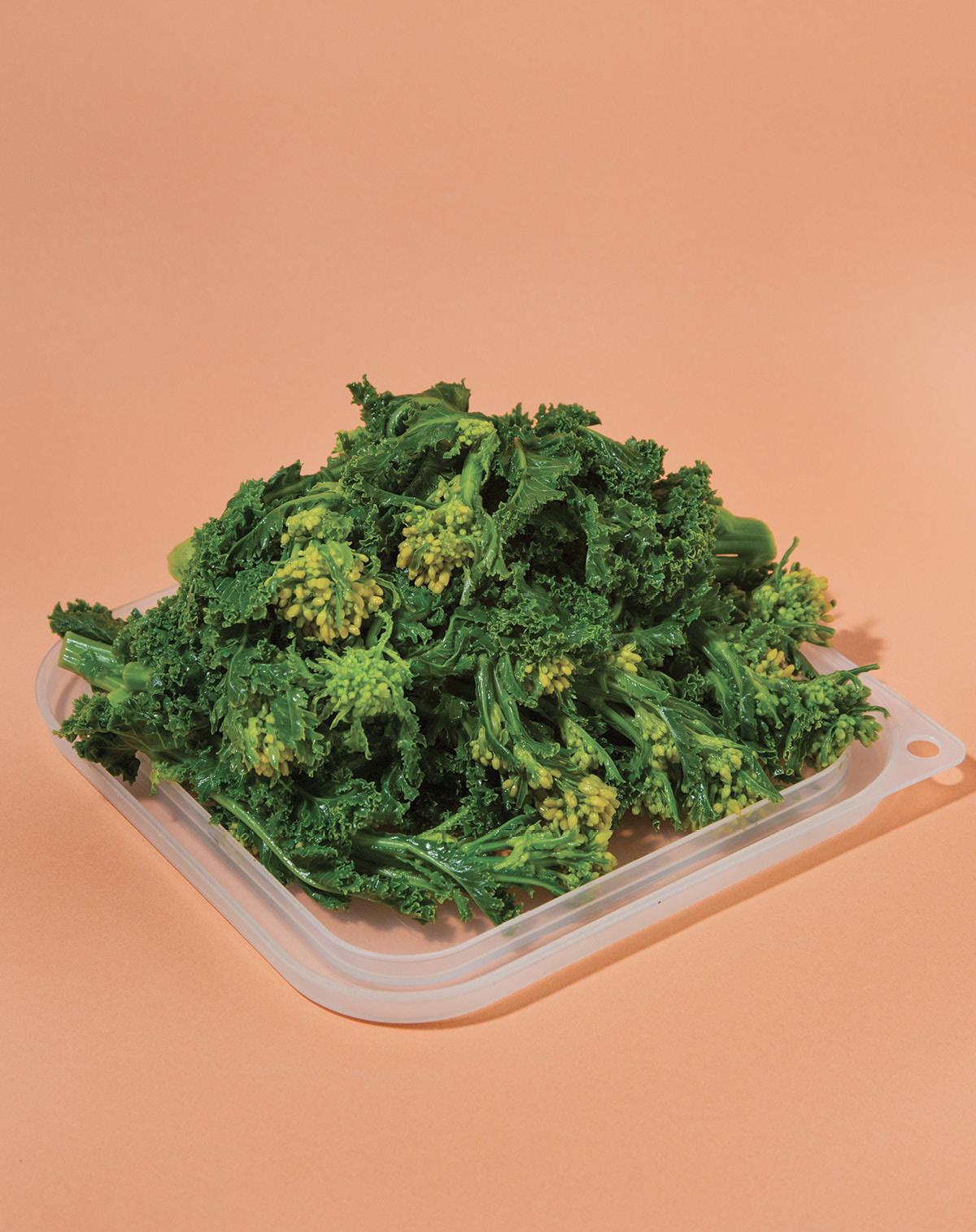
More often than not, we have found that when you travel to Italy (for work or, like, a honeymoon) you consume mostly pasta, pizza, and weird paper-thin shaved meat. It’s great and all, but when we are on the tarmac at VCE, reeling, staring out the window and wanting to cleanse the gluten ka-blam and go back to normalcy, we often daydream about this warm salad. It’s the thing we want to eat on a daily basis. A little bitter, sweet from the pickled shallots, salty, and hoveringly spicy, fibrous. Really gives you something to chew on. And unavailable in most trattorias, osterias, and/or ristorantes in Italia.
Serves 4
1 bunch broccoli rabe, trimmed of tough stems
Grapeseed oil
½ cup pickled ramps, garlic scapes, or shallots (see page 204)
Crushed red pepper flakes
Zest and juice of 1 lemon
Nice extra virgin olive oil
Bring a large pot of heavily salted water to a boil. Prepare an ice bath. Drop the broccoli rabe into the boiling water and cook for 1 minute. Remove from the boiling water and immediately plunge it into the ice bath. Once it is cooled, remove from the ice bath and dry well with a clean kitchen towel. Cut into 2-inch pieces. This can be used right away or packed up and refrigerated for a day or two.
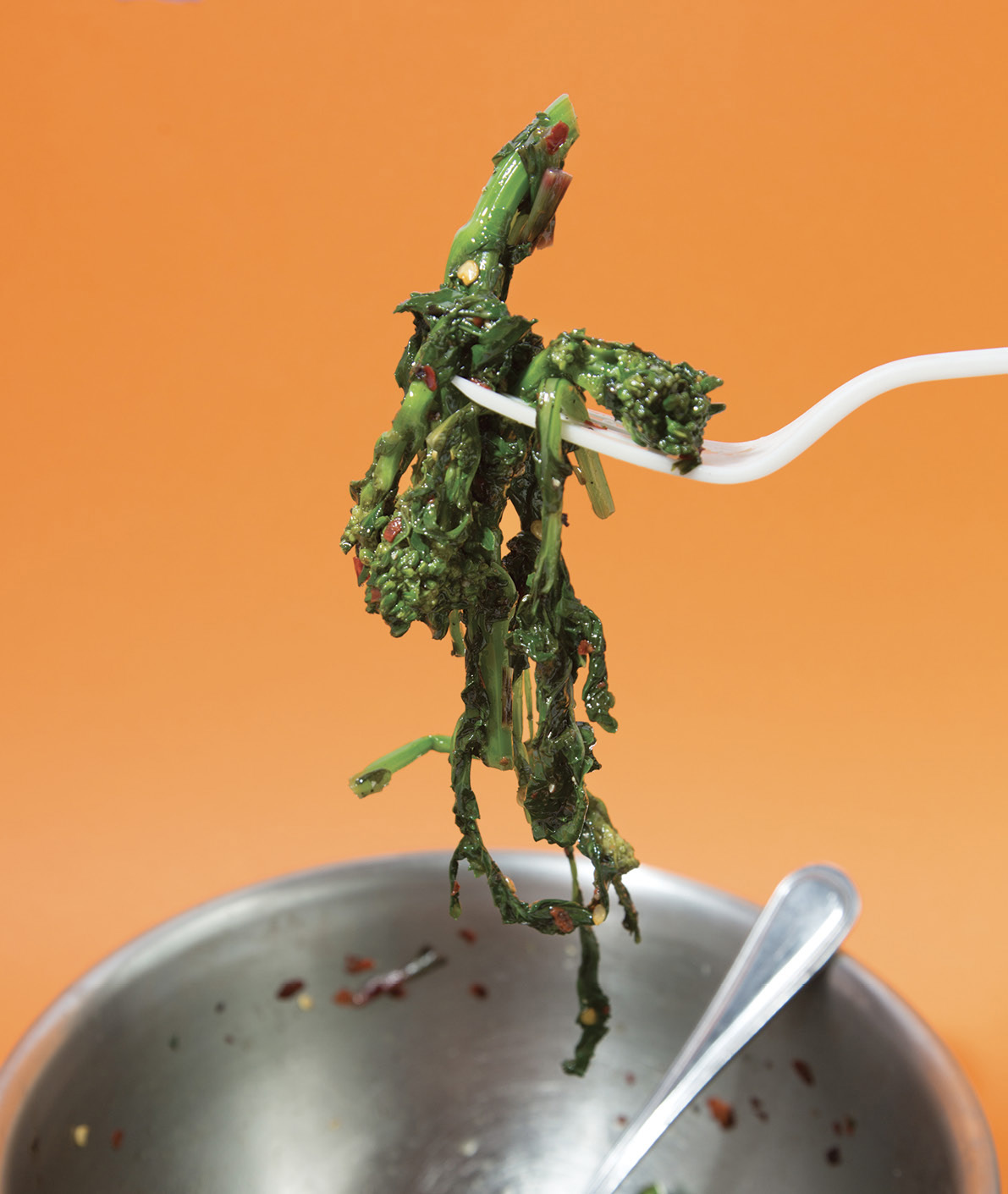
Heat a slick of grapeseed oil in a heavy sauté pan over medium heat until shimmering. Add the pickled ramps and cook for 1 minute, until they just start to brown. Add the broccoli rabe and toss with the pickled ramps—the rabe is already cooked so this is just to warm it up and evaporate some of the water from blanching. Transfer everything from the sauté pan into a medium bowl. Add a good pinch of red pepper flakes and salt and pepper and toss to combine. Add the lemon zest and lemon juice. Top with a nice olive oil.
BLANCHED BROCCOLI RABE WITH ORANGE-FENNEL VINAIGRETTE
Serves 4
1 bunch broccoli rabe, trimmed of tough stems
ORANGE-FENNEL VINAIGRETTE
Zest and juice of 1 orange
Zest and juice of 1 lemon
1½ teaspoons maple syrup
2 tablespoons fennel seeds, toasted and slightly ground
½ cup extra virgin olive oil
2 teaspoons Korean chile flakes
1 cup pecans, toasted and chopped
¼ cup Chickpea Mayo (page 211)
Blanch the broccoli rabe (as in the griddled broccoli rabe recipe above).
For the orange-fennel vinaigrette, combine the orange juice, lemon zest, lemon juice, and maple syrup (save the orange zest for garnish) in a bowl. Add the fennel seeds and slowly drizzle in the olive oil while whisking. Season with salt and black pepper
In a large bowl, toss the broccoli rabe (either at room temperature or slightly chilled) with the vinaigrette. Season with more salt and black pepper, the chile flakes, and a bit more lemon juice if it tastes flat. To serve, zigzag with chickpea mayo, sprinkle on the pecans, and dot with the reserved orange zest.
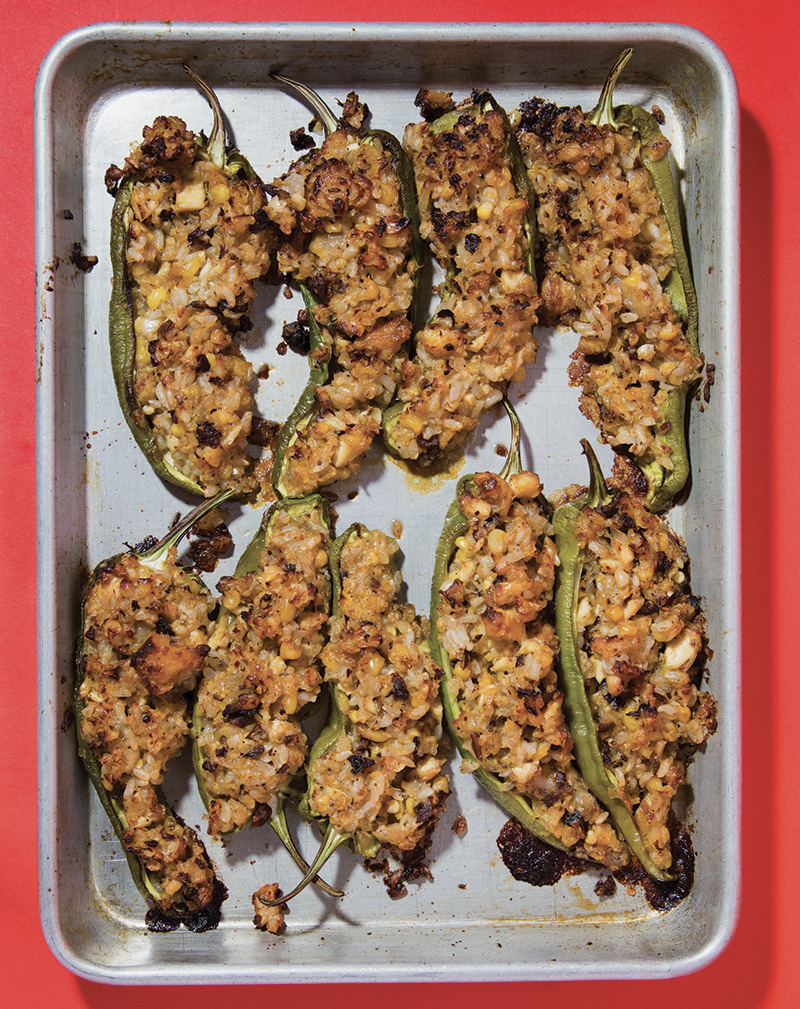
STUFFED GREEN PEPPERS WITH COCONUT AND ICEBERG
“Stuffed ‘pep-pahs’ tonight, we don’t want to miss that.”
—Line from the first denouement of the 1979 film Over the Edge.
The toasted coconut–iceberg garnish on this one is pivotal.
Serves 4
2 tablespoons grapeseed oil
1 pound firm tofu, drained well and roughly crumbled
2 tablespoons golden balsamic vinegar
2 tablespoons extra virgin olive oil, plus more for drizzling
1 medium yellow onion, cut into small dice
2 garlic cloves, minced
3 ears of corn, husked and kernels removed from the cobs, or 2 cups creamed corn
One 13-ounce can full-fat coconut milk
4 to 6 green bell peppers
2 cups shredded iceberg lettuce
¼ cup unsweetened coconut flakes, toasted
1 celery stalk, cut into small dice
2 tablespoons seasoned rice wine vinegar
Heat the grapeseed oil in a deep sauté pan over medium-high heat until shimmering. Add the crumbled tofu and cook until golden brown all over, about 8 minutes. Add the golden balsamic vinegar and cook for a little longer to let the sugar in the vinegar caramelize. Scrape the tofu into a bowl and set aside.
Rinse out the sauté pan and return to medium heat. Add the olive oil, onion, and a pinch of salt to the pan and cook, stirring often, until a deep brown color develops. Add the garlic and cook for a minute more, until aromatic. Deglaze the pan with water if the onions are getting too brown and sticking to the bottom of the pan. Add the corn, coconut milk, and the cooked tofu. Let this simmer for about 15 minutes. Remove the pan from the heat and blend a little using either an immersion blender or a food processor. The mixture should have the consistency of thick chili. Add salt and black pepper as needed.
Preheat the oven to 375ºF. Lightly oil an 8-by-8-inch baking dish.
Cut the bell peppers in half lengthwise, deseed using a little paring knife, and remove the stem if you are concerned about accidentally eating it. Stuff the peppers with the tofu mixture using a small spoon—use the back of the spoon to push the mixture into the pepper to fully fill it. Add enough filling to form a mound on top of the pepper. Pack the peppers as tightly as possible into the baking dish with the stuffed part facing upward. Drizzle a little olive oil on top of the peppers, cover with aluminum foil, and cook, covered, for 25 minutes. Crank the oven to 425ºF and cook for another 15 minutes, until the filling is browned. Serve these at room temperature or warm. Though the peppers are good on their own, a small salad of iceberg lettuce, toasted coconut, celery, and rice wine vinegar scattered over the top of the peppers right before serving is a nice garnish.
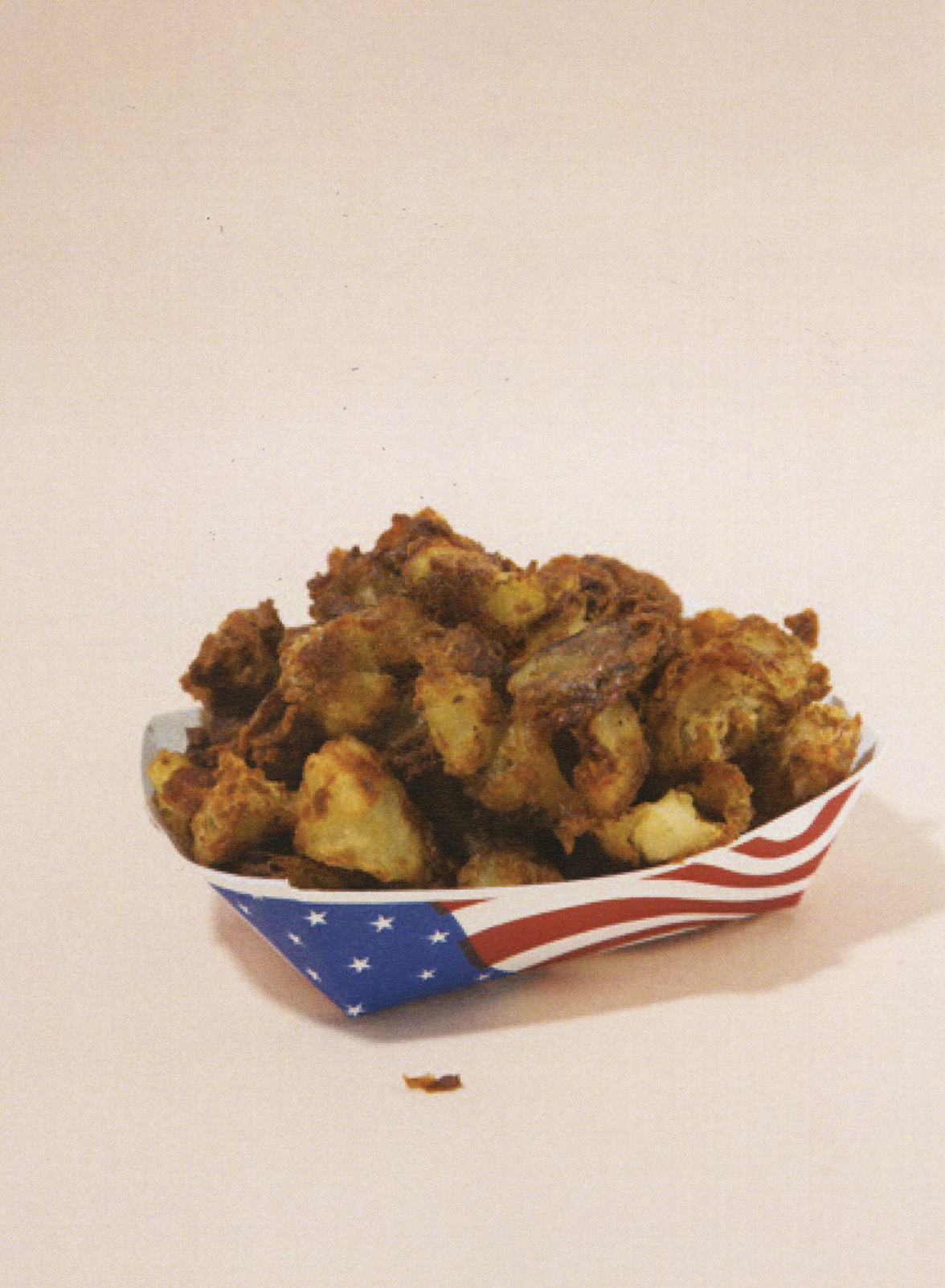
Say we are selling a ton of burgers on a blustery, chilly winter night, or a busy unseasonably balmy Saturday afternoon when there’s a gag-reel matinee rock show in the band shell a block away in Tompkins, and the folks jamming up the counter have never been to Superiority Burger before, and there are several exasperated new customers who are clamoring for French fries at the register and protesting, “You really don’t have fries?” There are five versions here: Cheesed (with pump cheese, a spicy cashew sauce), Exploded Pierogi (with green applesauce and a salsa verde), Mambo- Sauced (a Washington, DC, regional delicacy), Capered (with a lemony caper mayo), and Green Cream (with an avocado and griddled onion topping). And no, we don’t have fries.
Serves 6
1 cup ketchup
1 batch Crunchy Potatoes (page 208)
2 cups Pump Cheese (page 204), hot
6 scallions, thinly sliced
Layer the ingredients in the following order: some ketchup, potatoes, pump cheese, a little more ketchup, and scallions.
GREEN CHILE AND RAW APPLESAUCE CRUNCHY POTATOES
Serves 6
GREEN CHILE SAUCE
8 fresh hatch green chiles or frozen roasted chiles
2 tablespoons grapeseed oil
2 medium yellow onions, finely chopped
4 garlic cloves, thinly sliced
2 teaspoons ground cumin
1 teaspoon dried oregano
½ cup fresh cilantro, finely chopped
Juice of 1 lemon
APPLESAUCE
6 very tart green apples, unpeeled
1 cup fresh lemon juice
3 tablespoons maple syrup
1 batch Crunchy Potatoes (page 208), hot
1 cup sour cream or vegan alternative
Fresh cilantro leaves (optional)
Preheat the oven to 450ºF. Lightly grease a baking sheet.
For the green chile sauce, place the chiles on the baking sheet and roast until the skins are really browned—almost black, about 30 minutes. Remove from the oven and carefully put the hot peppers into either a paper bag or a bowl, covered in plastic wrap, and let them steam for about 10 minutes. They will be much easier to peel. Peel the skin off and remove as many seeds as possible.
Heat a few tablespoons of the oil in medium saucepan over medium-high heat. Add the onions and a large pinch of salt. Stirring often, let the onions get very brown, 8 to 10 minutes. Add the garlic, cumin, and oregano and cook for 1 minute more. Add the roasted chiles and just enough water to cover the peppers. Bring the mixture up to a boil and reduce the heat. Let it simmer for 15 minutes or so. Take the pan off the heat and stir in the cilantro. Blend with an immersion blender to create a chunky sauce. Add lemon juice and season with salt. Keep warm until ready to use.
To make the applesauce, cut the apples into 1-inch pieces and immediately transfer them to a medium bowl, adding just enough lemon juice to cover—this will both intensify the sourness of this sauce and keep the apples from browning. Move the apples and lemon juice to a blender and blend at medium speed to break down the apples. Season with the maple syrup. The applesauce should not be sweet—it should still be very sour but balanced just slightly by the maple. Refrigerate in a covered container for up to 2 days until ready to use.
In either a large serving dish or individual bowls, spoon half of the green chile sauce into the bottom of the dish and spread a little to create a base for the potatoes. Mound the potatoes on top of the sauce. Drizzle more green sauce on top of the potatoes. Dot with substantial dollops of sour cream and applesauce. Finish with a little freshly ground black pepper and cilantro leaves, if you like. Eat as soon as possible.
Serves 6
MAMBO SAUCE
2 tablespoons tomato paste
One 2-inch knob fresh ginger, peeled and roughly chopped
1 cup pineapple juice
½ cup white wine vinegar
½ cup firmly packed dark brown sugar
½ cup ketchup
3 tablespoons tamari
2 teaspoons Frank’s RedHot sauce
1 batch Crunchy Potatoes (page 208), hot
4 small sweet peppers, cut into ¼-inch rings
4 scallions, thinly sliced
For the mambo sauce, combine the tomato paste and ginger with about 1 cup water in a medium saucepan. Over medium heat, cook until all the water has evaporated and the tomato paste starts to brown. Add the pineapple juice and white wine vinegar and scrape the bottom of the pan thoroughly. Add the brown sugar, ketchup, tamari, and hot sauce. Bring to a boil, lower the heat, and cook until the liquid reduces almost by half and the sauce thickens, like sweet-and-sour sauce.
In individual bowls, generously spoon the mambo sauce over the hot crunchy potatoes. Strategically place the sweet pepper rings on top of the potatoes and sprinkle with the scallions.
CRUNCHY POTATOES WITH CAPER SAUCE
Serves 6
CAPER SAUCE
1 cup Chickpea Mayo (page 211)
Zest and juice of 2 lemons
½ cup capers packed in salt, rinsed and finely chopped
1 teaspoon maple syrup
1 batch Crunchy Potatoes (page 208), hot
Squeeze of lemon
½ cup fresh flat-leaf parsley, roughly chopped
For the caper sauce, mix together the mayo, lemon zest, lemon juice, capers, and maple syrup in a bowl. Season with salt and pepper. Thin with water if the sauce seems too thick—it should be loose enough to drizzle.
In individual bowls, spoon the caper sauce liberally over the hot crunchy potatoes. Finish with a squeeze of lemon and some chopped parsley. Very easy.
CRUNCHY POTATOES WITH GREEN CREAM AND GRIDDLED ONIONS
Serves 6
GREEN CREAM
2 very ripe avocados, pitted and skin removed
4 cups fresh cilantro leaves and stems, roughly chopped
1 cup fresh flat-leaf parsley leaves and stems, roughly chopped
1 garlic clove
Juice of 2 lemons
2 tablespoons extra virgin olive oil
2 medium red onions, thinly sliced
2 tablespoons grapeseed oil
1 batch Crunchy Potatoes (page 208), hot
4 cups shredded iceberg lettuce
Combine the avocados, cilantro, parsley, garlic, lemon juice, and olive oil in the bowl of a food processor and blend until smooth. Add salt and pepper to taste. If the consistency is too thick, add a little bit of water to bring it together.
Heat a large skillet over medium-high heat. Add a tablespoon or so of the grapeseed oil and once the oil is shimmering, add the red onions and a pinch of salt. Cook until the onions develop some nice caramelization and are slightly softened but still retain some texture, about 15 minutes. Transfer the onions to a small bowl.
Spoon some of the green cream onto the bottom of a serving dish. Mound the potatoes on top of that. Cover the potatoes in the rest of the green cream. Dot with grilled onions and finish with a mound of iceberg lettuce. Eat immediately.
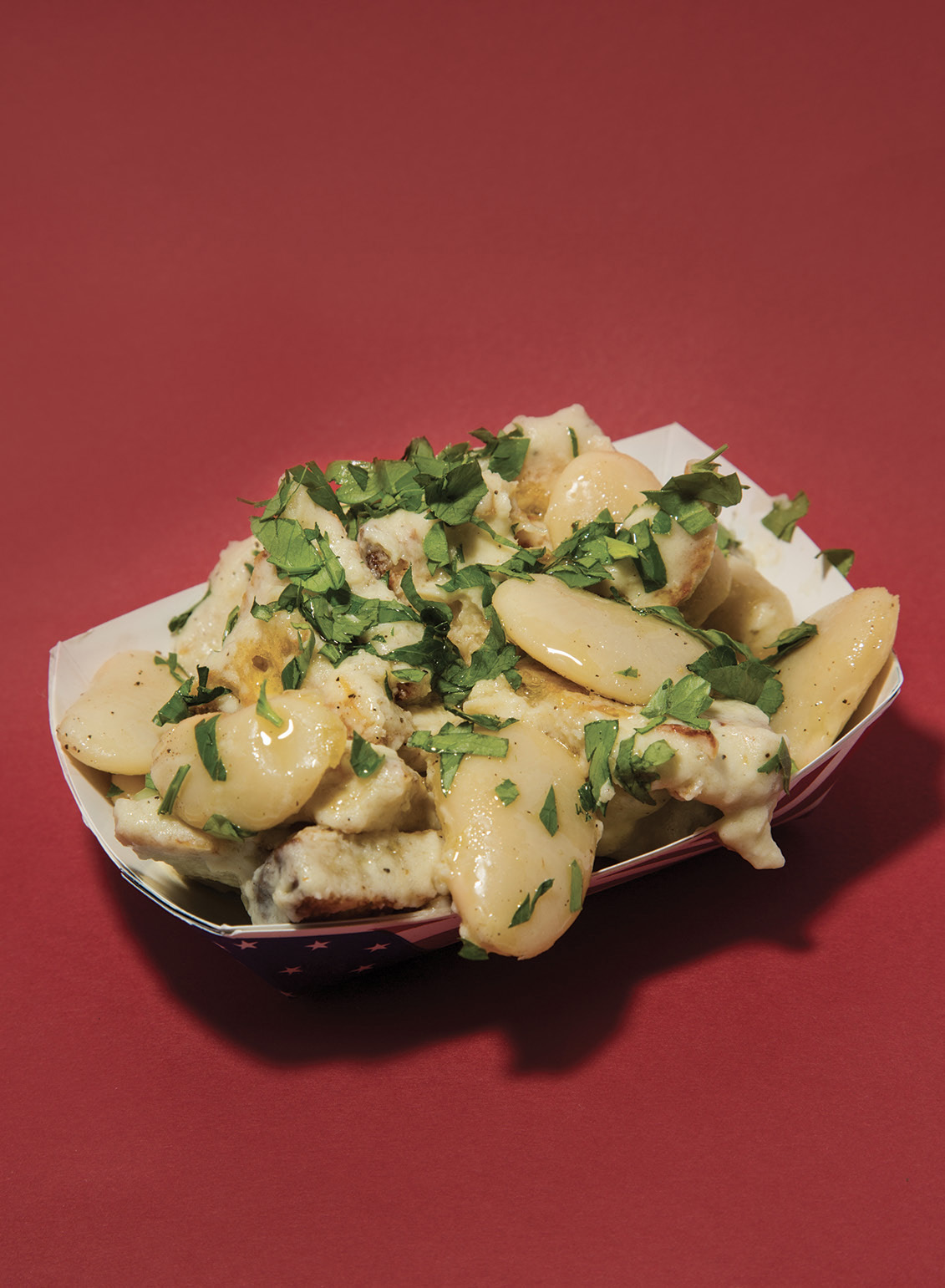
Call it British, call it Tuscan, call it one strata of a Mexican torta. Who knows? Toasted bread and properly cooked beans is a killer. One of our initial cooks, a heavily tattooed (on the neck even) and fancy restaurant–trained gentleman named Jeff, put this recipe together. Cook the beans in the oven, low and slow, covered, with a little olive oil, lots of unsalted water, and some of the woodier herbs (rosemary, thyme) and you will create something very special. A heavy hand with salt when you assemble the final dish will jolt everything to life.
Serves 6
3 cups dried or fresh beans (a mix or one kind—gigante beans are a good choice)
6 tablespoons extra virgin olive oil, plus more for splashing and drizzling
2 big fresh rosemary sprigs
4 fresh thyme sprigs
6 garlic cloves
2 tablespoons red wine vinegar, plus more for serving
Six ½-inch slices sourdough bread
1 cup fresh flat-leaf parsley, roughly chopped
If using gigante beans, soak the beans in a large amount of water overnight. If these are fresh shell beans or smaller dried beans, there’s no need to soak.
Preheat the oven to 300ºF.
Drain the beans and put them in an oven-safe pot with a lid, something like a Dutch oven. Add enough water to just cover the beans and top with the olive oil. Add the rosemary, thyme, and garlic to the pot, apply the lid, and put into the oven. Depending on the type and size of the bean, the cooking time will vary. Check after 90 minutes (this is true for all beans, both fresh and dry—big and small). If needed, add more water to the pot to keep the beans submerged. For big beans, you can check every hour or so for 2 hours, but for smaller beans and fresh shell beans, start checking them every 30 minutes. When the beans are tender (taste them), they are done. Remove the pot from the oven. Now is a good time to season the beans with salt and pepper. Take 2 cups of beans from the pot and put them into a medium bowl. Reserve the rest. Add the red wine vinegar and a splash of olive oil to these beans and mush/smash, using the back of a spoon, into a rough puree.
When you are ready to eat, drizzle the bread with a little olive oil and toast in a skillet or a toaster until totally golden brown—do not underestimate or rush this step. Put the reserved cooked beans into a large bowl. Add the bean puree and most of the parsley and stir to combine. Tear the warm toasted bread into bite-size chunks and drop into the bowl of beans. Stir and convince the bread to absorb some of the liquid. Season with salt and pepper and a little more red wine vinegar if needed. Scatter the rest of the parsley on top and serve hot.
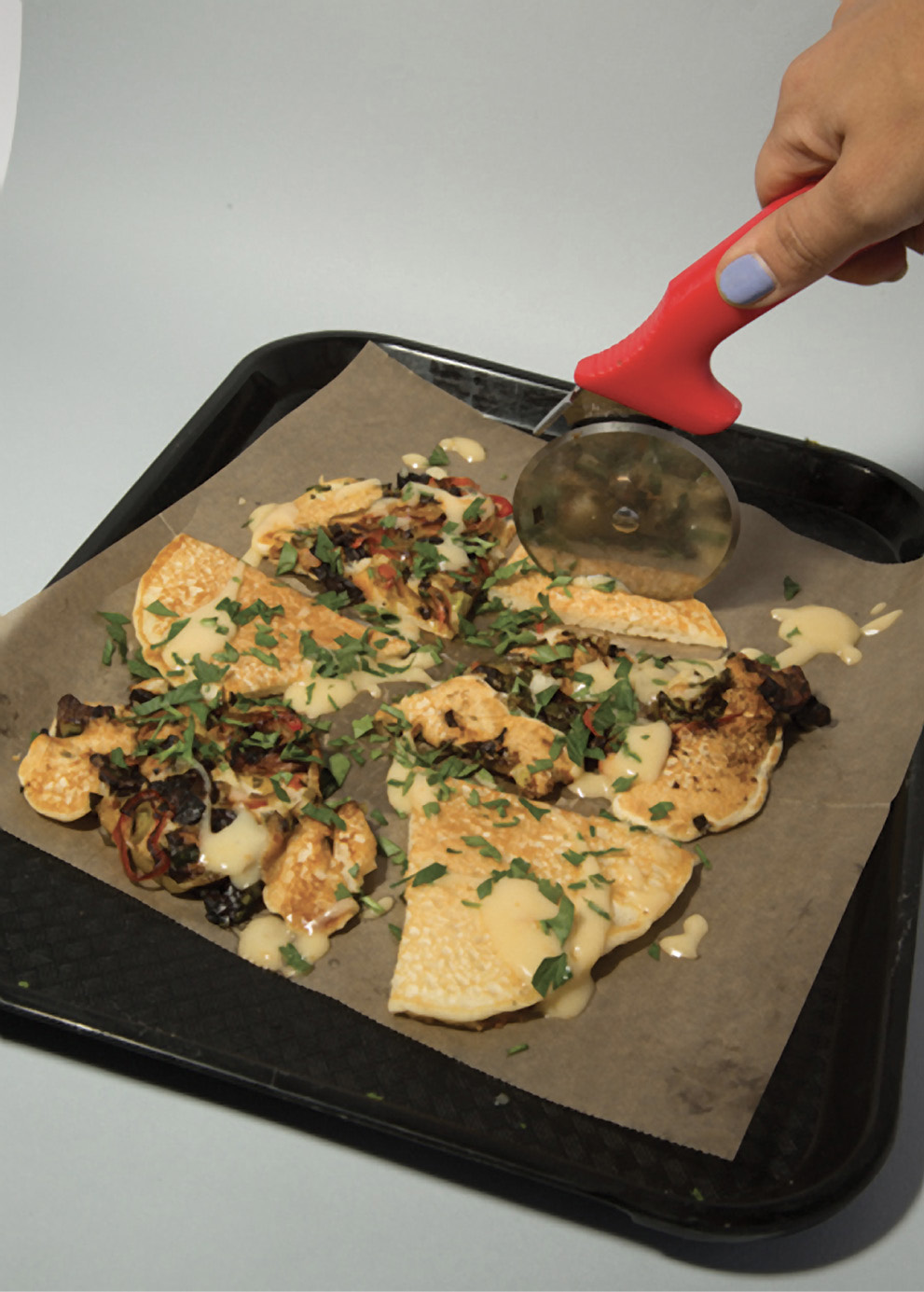
While it appears on first glance to be a traditional breakfast pancake, this is very much a delivery system for random aging and spotty vegetable bits and offcuts hanging out in the back of the fridge; it’s stuff not quite pretty enough to be a star, but still packed with good flavor, and like everyone, we just hate throwing away the ugly, unpretty scraps and knobs. The base recipe is vegan and utilizes beer to raise the batter. In our trials we first tried all the tonier beers from Tompkins Finest Deli around the corner on Avenue A, before agreeing that Budweiser was the perfect leavener. There are two versions here: one has a scallion pancake vibe and works with summer vegetables, and the second is ragingly full-on autumnal and shares DNA with the classic pasta tortelli di zucca (squash, sage, almond cookies).
Makes 4 to 6 pancakes
2 cups all-purpose flour
2 teaspoons baking powder
2 teaspoons kosher salt
1 tablespoon cane sugar
One 16-ounce can Budweiser
2 tablespoons extra virgin olive oil
2 tablespoons grapeseed oil
3 scallions, cut into ¼-inch pieces
1 pound green beans or wax beans, cut in half
One 1-inch knob fresh ginger, peeled
½ cup pickled hot peppers, chopped small
¼ cup fresh flat-leaf parsley, finely chopped
½ cup unsweetened coconut flakes, toasted
Lemony mayo (optional)
For the pancakes, whisk together the flour, baking powder, salt, and sugar in a medium bowl. Add the whole can of beer and whisk until just combined. Stir in the olive oil. Add a little water (a couple tablespoons) to make it the consistency of thin pancake batter.
Add a tablespoon or so of the grapeseed oil to a large skillet over medium-high heat. Let the oil get very hot but not smoking and add the scallions. Cook until they start to brown and soften, a couple of minutes. Add the green beans to the skillet and cook over high heat, stirring every few minutes, until the beans are seared on at least one side and slightly softened. Transfer the bean mixture to a large mixing bowl. Using a Microplane, grate the ginger over the hot beans. Add the chopped hot peppers and parsley and season with salt and black pepper.
Heat a large nonstick skillet or griddle over medium heat. For each pancake, add a very thin layer of oil and drop a small handful of the green bean mixture into the center of the pan. Spread out the beans with the back of a spatula so there are little gaps in the green beans. Slowly add the batter over the beans—add just enough to cover and hold the beans together. Sprinkle the coconut on top of the raw batter. When the pancake starts to look dry around the edges, flip carefully and cook for a while longer on the other side. Serve this immediately with a lemony mayo or just as it is. It cuts nicely into wedges for sharing. You can also cook this pancake without the savory filling and eat it with maple syrup. The batter will last for 2 days in the refrigerator.
ZUCCA PANCAKE
3 scallions, cut into ¼-inch pieces
1 butternut squash, chopped and roasted
One 1-inch knob fresh ginger, peeled
½ cup pickled hot peppers, chopped small
¼ cup fresh flat-leaf parsley, finely chopped
½ cup toasted vegan almond cookie pieces
2 tablespoons shredded fresh sage leaves
Follow the same method as above, but with these ingredients instead. A sage-infused chickpea mayo (page 211) will top this off nicely.
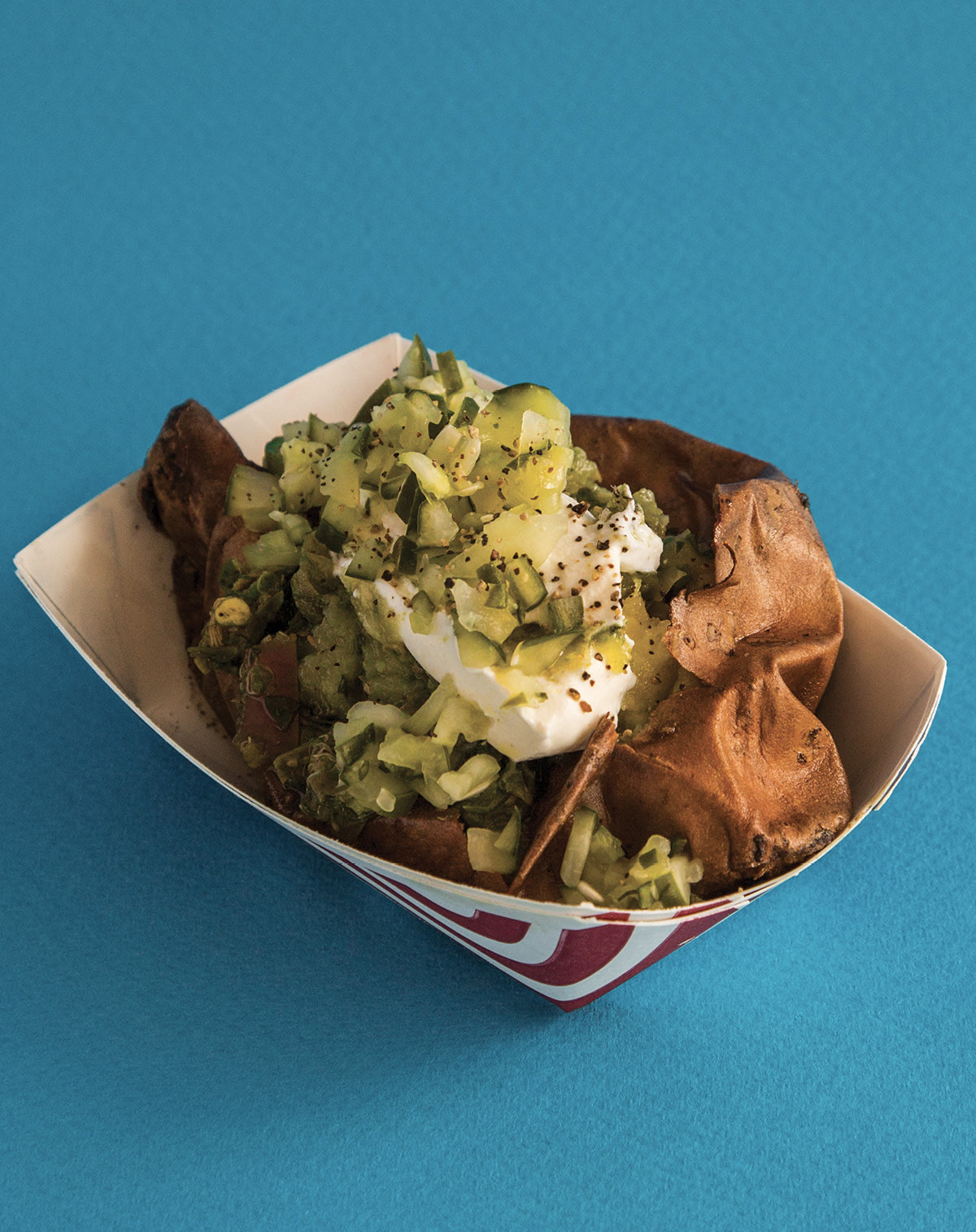
The problem with a lot of sweet potato preparations is that they fail to escape tasting like Thanksgiving. But white sweet potatoes are different. They roast into a yellow creaminess and are slightly less sugary than a yam or the orange version, and also not as starchy as the purple-skinned Japanese variety. Search for them in the fall. We get ours from a farm in New Jersey called Race Farm. The green sauce component here lassoes and tames the sweetness, and the chopped pickles finish the loaded quality with an appropriate vegetal crunch.
Serves 6
TARRAGON GREEN SAUCE
1 shallot, minced
2 tablespoons red wine vinegar
1 tablespoon maple syrup
1½ cups chopped fresh tarragon
1 cup chopped fresh flat-leaf parsley
Zest of 2 lemons
2 serrano chiles, minced
½ cup capers packed in salt, rinsed and finely chopped
Extra virgin olive oil
Extra virgin olive oil
6 medium white sweet potatoes, scrubbed well
1 cup labne or sour cream, or vegan alternative
1 cup chopped dill pickles
Juice of 1 lemon
To make the tarragon green sauce, first soak the minced shallot in red wine vinegar and a splash of maple syrup for about 30 minutes. Mix together the tarragon, parsley, lemon zest, chiles, capers, and marinated shallot in a bowl. Add enough olive oil to make it saucelike. Season with salt and black pepper and red wine vinegar, if needed. The flavors will come together more on the day after the sauce is made.
Preheat the oven to 325ºF. Lightly grease or line a baking sheet with parchment paper.
Rub the sweet potatoes with a little bit of olive oil, sprinkle the outside with salt, and place on the baking sheet. Bake until the potatoes, when prodded, yield completely—they should be totally tender all the way through—about 1 hour. Remove from the oven and let cool until they can be handled somewhat comfortably. Using a small paring knife, cut a slit in the top side of each potato. Gently open each slit, revealing the white inner flesh. Sprinkle a bit of salt and drop a couple tablespoons of tarragon green sauce into the openings and, using a fork, gently mash the flesh of the potato with the sauce to incorporate the two together. Add a dollop or two of labne, a spoonful of the chopped pickles, a squeeze of lemon, and some freshly ground black pepper to finish.


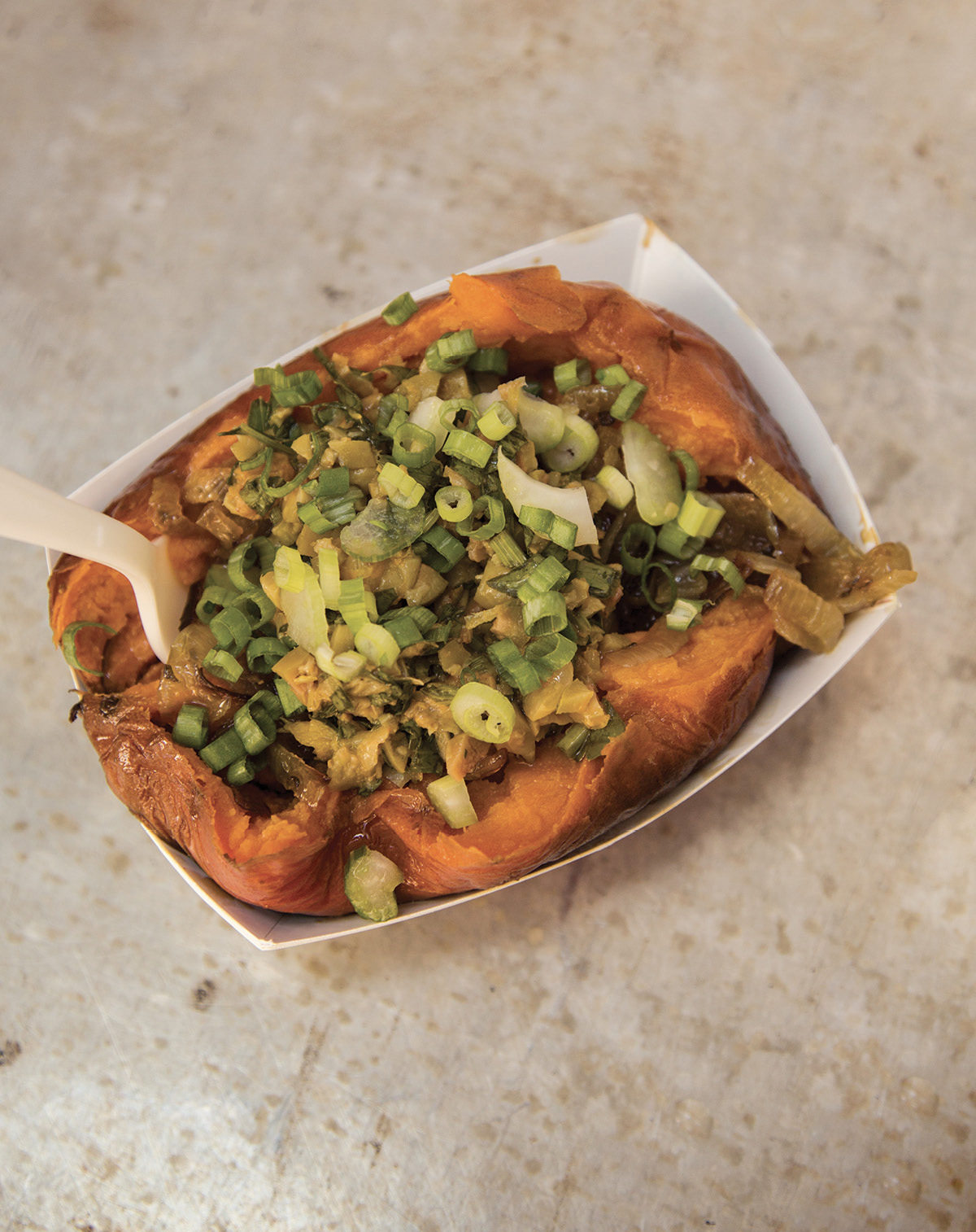
ROASTED ORANGE SWEET POTATO WITH OLIVE-RAISIN CHUTNEY
If the previous sweet potato dish can be seen as a wholly original breakout sensation, this one is that dish’s slightly dull, kind of homely sibling. But it’s a nice one to try if you find yourself flush with a crisper full of sage leaves and a cupboard full of the more lumpen, less flamboyant orange sweet potato variety.
Serves 6
OLIVE-RAISIN CHUTNEY
¾ cup Castelvetrano olives, pitted and chopped
¾ cup Pickled Golden Raisins (page 205), chopped
Zest and juice of 2 oranges
½ cup chopped fresh flat-leaf parsley
6 medium orange sweet potatoes, scrubbed well
¼ cup extra virgin olive oil, plus more for cooking
1 medium yellow onion, thinly sliced into half-moons
6 fresh sage leaves, finely chopped
3 scallions, thinly sliced
1 celery stalk, finely chopped
For the olive-raisin chutney, mix together the olives, raisins, orange zest, orange juice, and parsley in a bowl. Add some of the raisin pickling liquid if the mixture seems a little dry. Set aside until ready to use or refrigerate for up to 3 days if using another day.
Preheat the oven to 325ºF. Lightly grease or line a baking sheet with parchment paper.
Rub the washed potatoes with a little bit of olive oil and sprinkle the outside with salt. Place the potatoes on the baking sheet. Bake until the potatoes are very, very tender when pierced with a paring knife, about 1 hour. Remove from the oven and let cool a little until they can be handled.
While the potatoes are in the oven, prepare the sage-melted onion. Combine the olive oil, onion slices, and sage in a small saucepan. Over medium-low to low heat, cook the onions, stirring once in a while, until translucent, about 30 minutes. You don’t want to brown them—they should be meltingly tender. Remove the pan from the heat and season the onions and oil with a medium pinch of salt and the same of pepper.
When the potatoes are cool enough to touch, cut a slit in the top side of the potatoes and open to reveal the orange inner flesh. Spoon a little bit of the melted onions and some of the onions’ oil into the opening; using a fork, gently mash into the flesh. You can taste the potato at this point to see if it needs more salt. Spoon about a tablespoon or so of the chutney over the flesh (about 1 cup total), making sure it runs the length of the potato. Sprinkle with the scallions and celery.
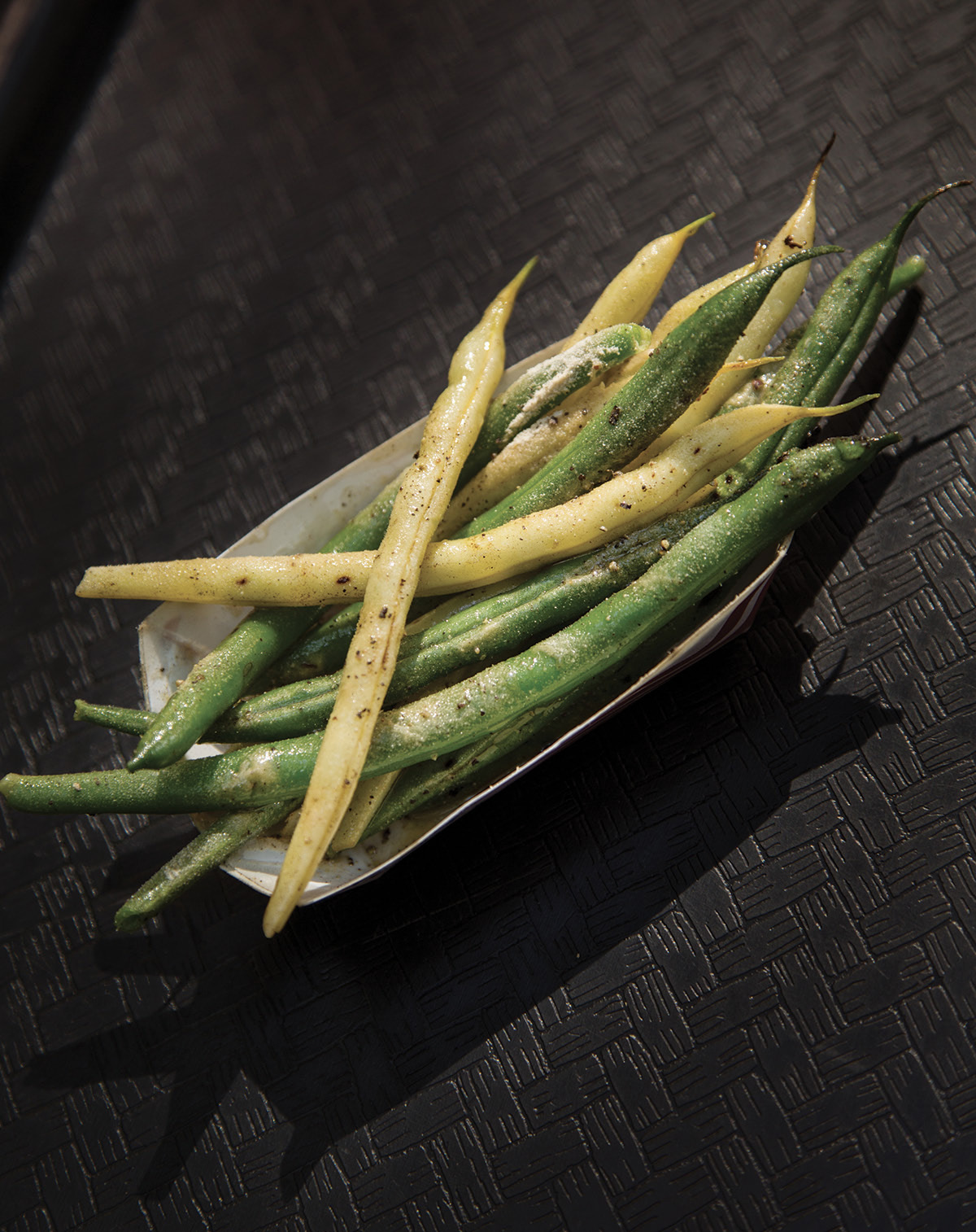
Amazon.com is a bummer. We can all agree on this. They have made a career flattening the little, mighty, important mom and pop bookstores out of business. In New York city alone: St. Mark’s Bookshop, Oscar Wilde Bookshop, Murder Ink, for example, all vanished. You can buy anything on Amazon. Compact discs, slacks, fetish hot sauces, you name it, they will sell it to you. We want this warm salad to taste as gripping and succulent as a paper cone of boardwalk fries minus the airborne fryer oil and fingered tubers. The key is powdered malt vinegar, which can be difficult to source. Amazon has it. But order it from a tiny online spice emporium instead; you might not get it in forty-eight hours, but we will all feel better about this commercial exchange.
Serves 6
1½ pounds fresh beans (such as green or yellow Romanos, wax beans, or green beans), trimmed
Grapeseed oil
3 tablespoons malt vinegar
4 tablespoons malt vinegar powder, plus more for dusting
3 tablespoons extra virgin olive oil
Flaky sea salt
Bring a heavily salted pot of water to a boil. Set up an ice bath. Gently drop the beans into the water and let boil for only 20 seconds or so. Immediately plunge them into the ice bath. Once they are cool, drain the beans well and dry with a clean kitchen towel.
In a large skillet, bring a little bit of grapeseed oil to almost smoking over high heat. Drop the beans into the skillet and move them around continuously so they get a nice sear on both sides. Transfer the beans into a large mixing bowl. Add the malt vinegar, malt vinegar powder, olive oil, and a lot of salt and pepper. The seasoning should remind you of boardwalk French fries. Top each serving with a sprinkle of flaky sea salt and a dusting of more malt vinegar powder. Eat with your fingers.
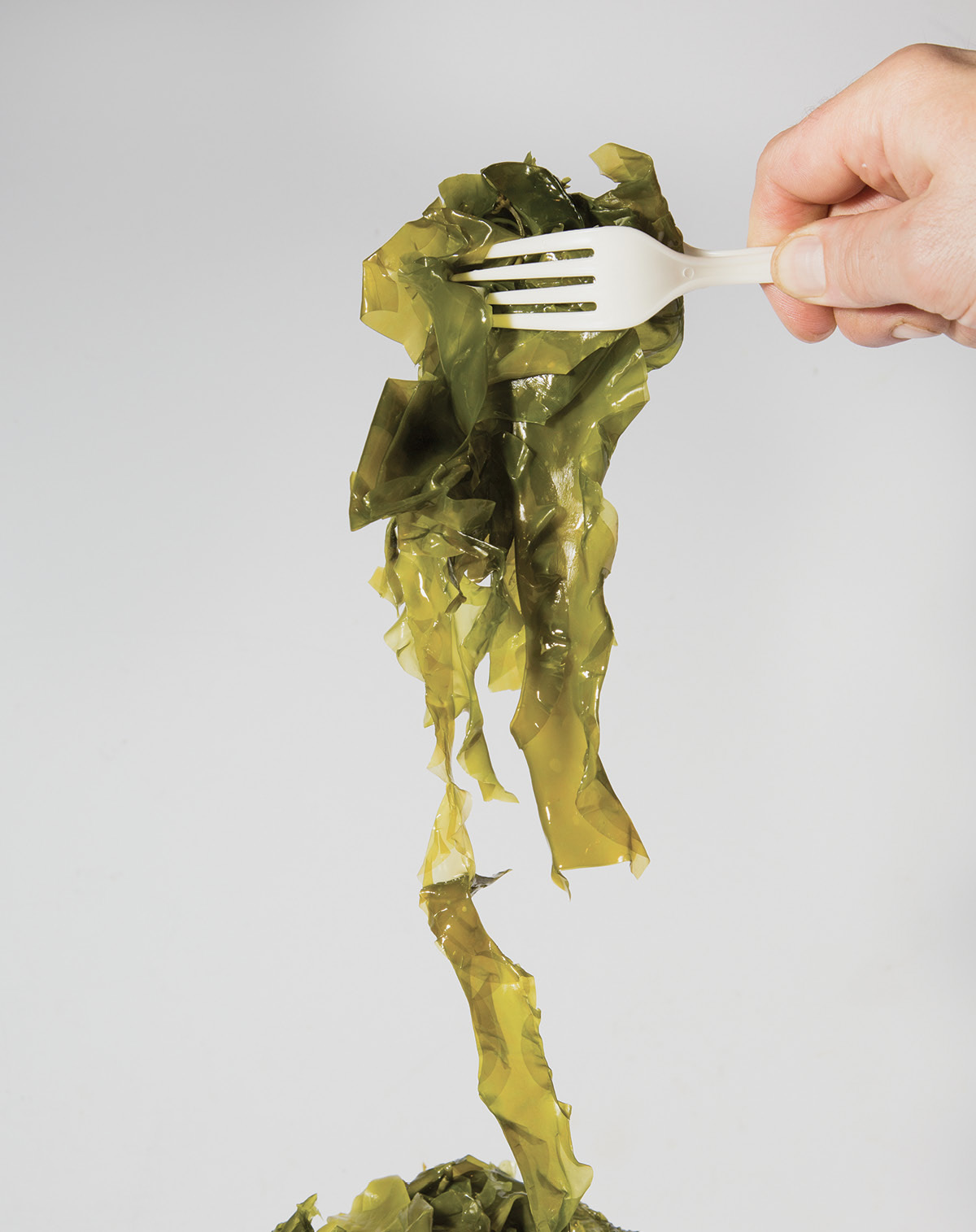
Linguistically, authentically, and culinarily, this one is a minefield of inaccuracy. When it’s available, we get our kelp fresh from Thimble Island Ocean Farms in Connecticut. Brent, who runs the place, is a seaweed advocate the likes of which we have rarely seen. Cool guy, great product. The scampi sauce is our attempt to mimic the intoxicating whiff of red-checkered-tablecloth seafood without yanking any fish, shelled or otherwise, from the roiled sea.
Serves 6
SCAMPI SAUCE
3 garlic cloves, very thinly sliced
1 cup dry white wine
Juice of 1 lemon
1 cup extra virgin olive oil
1½ teaspoons Korean chile flakes
2 tablespoons chopped fresh flat-leaf parsley
1 pound mixed vegetables (kabocha squash, Romanesco, string beans, and cauliflower work nicely), cut into 1½-inch pieces
Extra virgin olive oil
8 ounces fresh kelp (we source ours from Thimble Island Ocean Farm), cut down into noodlelike ribbons
½ cup chopped fresh flat-leaf parsley
1 cup coarse bread crumbs, toasted
To make the scampi sauce, sauté the garlic in a bit of olive oil in a large skillet over low heat. Don’t brown the garlic; just get it meltingly soft. Add the white wine and let the alcohol cook off. Take the pan off the heat. Whisk in the lemon juice and slowly whisk in the olive oil. Season with salt, pepper, the chile flakes, and parsley.
Preheat the oven to 400ºF.
Lightly toss the vegetables with some olive oil, salt, and pepper and roast in the oven until browned and tender. This can be done ahead of time. Leftover roasted vegetables work well in this dish. Heat a tablespoon or so of olive oil in a large skillet over medium heat. Add the kelp to the pan, and stir to help it get evenly heated through. Add the roasted vegetables and stir to combine with the kelp. Add 1½ cups of the scampi sauce to the pan and toss thoroughly with everything else to coat the kelp and the vegetables. They should be glossy. Transfer to a large serving dish or individual bowls. Serve very hot with the chopped parsley and bread crumbs scattered over the top.
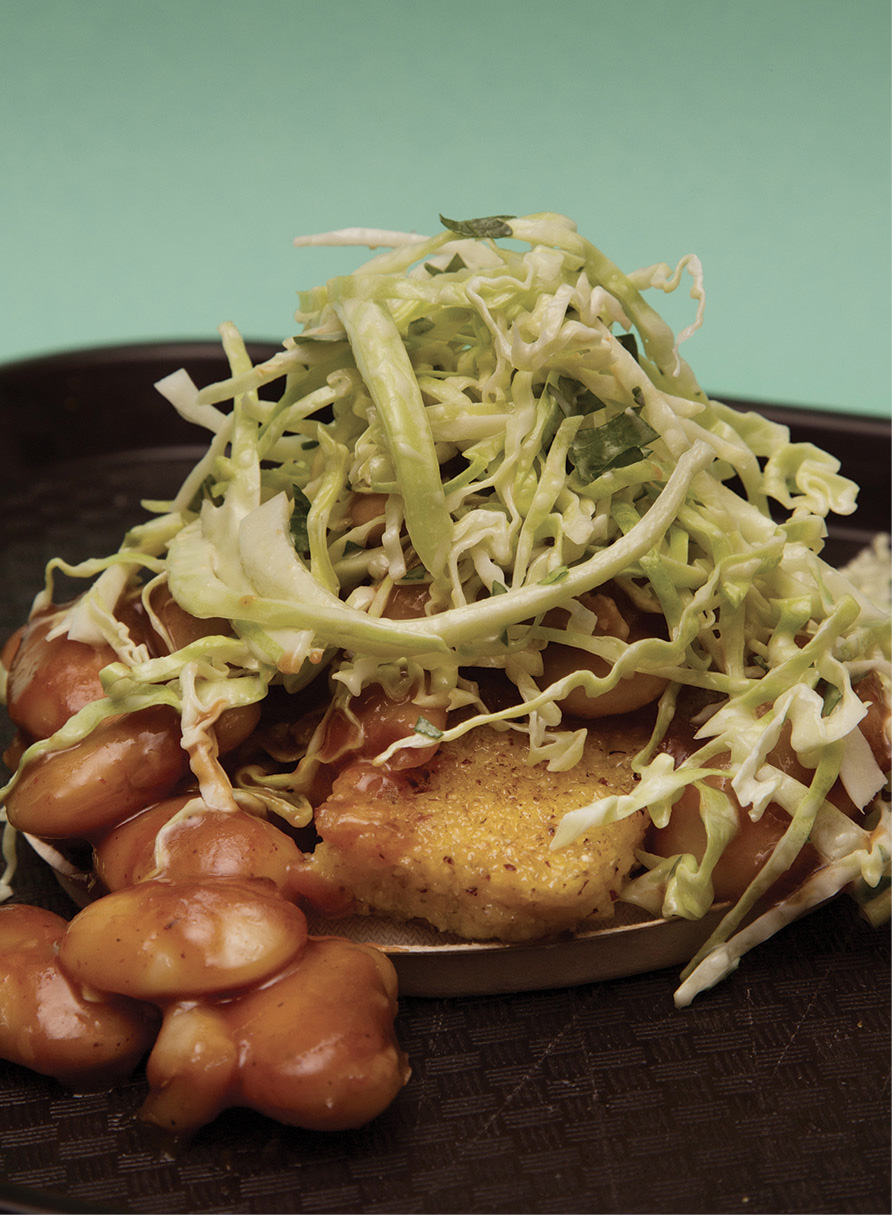
BBQ BAKED GIGANTE BEANS WITH POLENTA AND COLESLAW
Speaking of gut-level, primal foodstuffs, is there anything more satisfying than an overloaded platter of regional American barbecue? Something greasy, stringy, sweet, and gristle-laden? But what about the hopeless descent into gastrointestinal shame that follows up the hillock of saturated translucent paper plates? Is there another way? Could this actually be pulled off without slow-cooked bovine or swine, or vegetarianly speaking, no vital wheat gluten as an analogue?
Serves 8
1 pound dried gigante beans, soaked overnight
Grapeseed oil
1 medium yellow onion, finely chopped
4 garlic cloves, minced
8 cups water
2 tablespoons espresso (we use Café Bustelo)
½ cup pureed tomatoes
¼ cup firmly packed dark brown sugar
4 teaspoons Gulden’s brown mustard
2 tablespoons molasses
2 tablespoons Frank’s RedHot sauce
¼ cup extra virgin olive oil
2 cups shredded green cabbage
2 tablespoons chopped fresh dill
½ cup Chickpea Mayo (page 211)
Juice of 1 lemon
Grapeseed oil
8 Polenta Planks (see page 207)
Preheat the oven to 300ºF.
Drain the beans and put in a sturdy oven-safe pot, like a Dutch oven. In a medium pot over medium-high heat, add enough grapeseed oil to coat the bottom. Add the onion and cook until soft and translucent, about 12 minutes. Add the garlic and cook until not raw anymore, basically. Add the water, espresso powder, tomato puree, brown sugar, mustard, molasses, and hot sauce and bring to a rolling boil. Remove the pot from the heat and pour the liquid over the beans. Add the olive oil to the beans and juice. Cover tightly with aluminum foil or a lid and put in the oven. This is going to take a while. Check after 2 hours and make sure not too much of the liquid has evaporated. If it has, just add more water, cover, and cook some more. Check every hour or so until the beans are tender. Remove from the oven and season generously with salt and pepper. Let sit—the beans will absorb a lot of this liquid and release starch to make a thick sauce.
Mix together the cabbage with the dill, mayo, lemon juice, and some salt and pepper in a medium bowl. In a large nonstick or cast-iron skillet set over medium heat, heat a few tablespoons of grapeseed oil until shimmering. For each serving, sear a polenta plank on one side until golden brown and a little crispy, then flip it and sear the other side. Transfer to a plate, top generously with beans and bean sauce, and finish with a mound of the cabbage slaw.
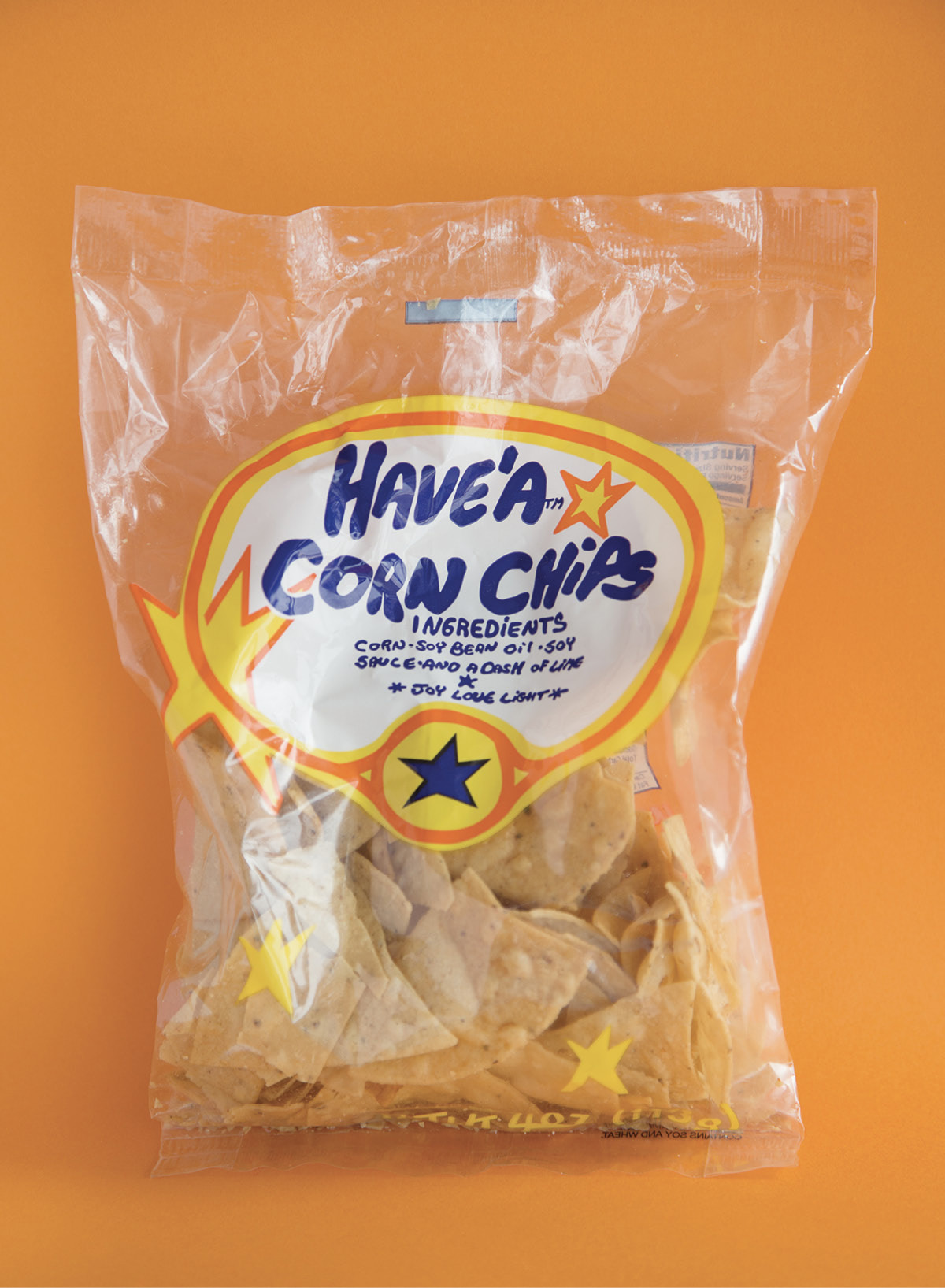
BBQ CARROTS WITH CASHEW CREAM AND CORN CHIPS
We love carrots. But we’ve never had an amazing, life-changing carrot. However, that does not diminish any of our desires to wax rhapsodic about the orange root with the actually-not-that-delicious green top. Here we roast them deeply and then drench in barbecue sauce. The cashew cream keeps the acidity in check, and the re-toasted corn chips dial down the angelic quality. You can really sink your teeth into this number.
Serves 6
12 large carrots, cut into irregular 1½-inch pieces
Extra virgin olive oil
1½ cups BBQ sauce (page 134), pureed and simmered for 10 minutes
½ cup Cashew Cream (page 205)
1 cup crushed corn chips (we like Have’a corn chips)
2 cups pea shoots or baby mustard greens (arugula would work in a pinch)
Juice of 1 lemon
Preheat the oven to 400ºF. Line a baking sheet with parchment paper.
Toss the carrots in a bowl with a few tablespoons of olive oil, a big pinch of salt, and some pepper. Transfer to the baking sheet and spread into a single layer. Roast in the oven until they are almost done, 15 to 20 minutes. Remove the pan from the oven, raise the oven temperature to 475ºF, and drizzle 1 cup of the BBQ sauce over the carrots. Use a spoon to toss the carrots in the sauce so they are well coated. Return the pan to the oven and let cook until they are caramelized, sticky, and tender, 5 to 7 minutes more. Remove from the oven and let cool briefly.
To serve, create a low mound of carrots on a large plate. You can drizzle the extra ½ cup BBQ sauce over them if you’d like. Drizzle the cashew cream (in maybe a fancy zigzagged pattern; however, any design will do) all over the carrots. Scatter the crushed chips over the carrot mound, then top with some greens (pea shoots or something similar) that have been tossed in a little lemon juice and salt. Serve hot while the chips are still crisp and the greens still have their integrity.
Upon completion of this recipe you will be left with a bumper crop of spent oil. You will pour it into a container once it has cooled, and leave it on the counter for many weeks. You will use straight from the bottle fresh oil for all of your other cooking, and the cling film–wrapped container will begin to collect dust near the spoon trivet. This oil tastes only faintly of potato and is fine to use for almost any other savory and sweet application. Use it up.
Serves 6
Grapeseed oil
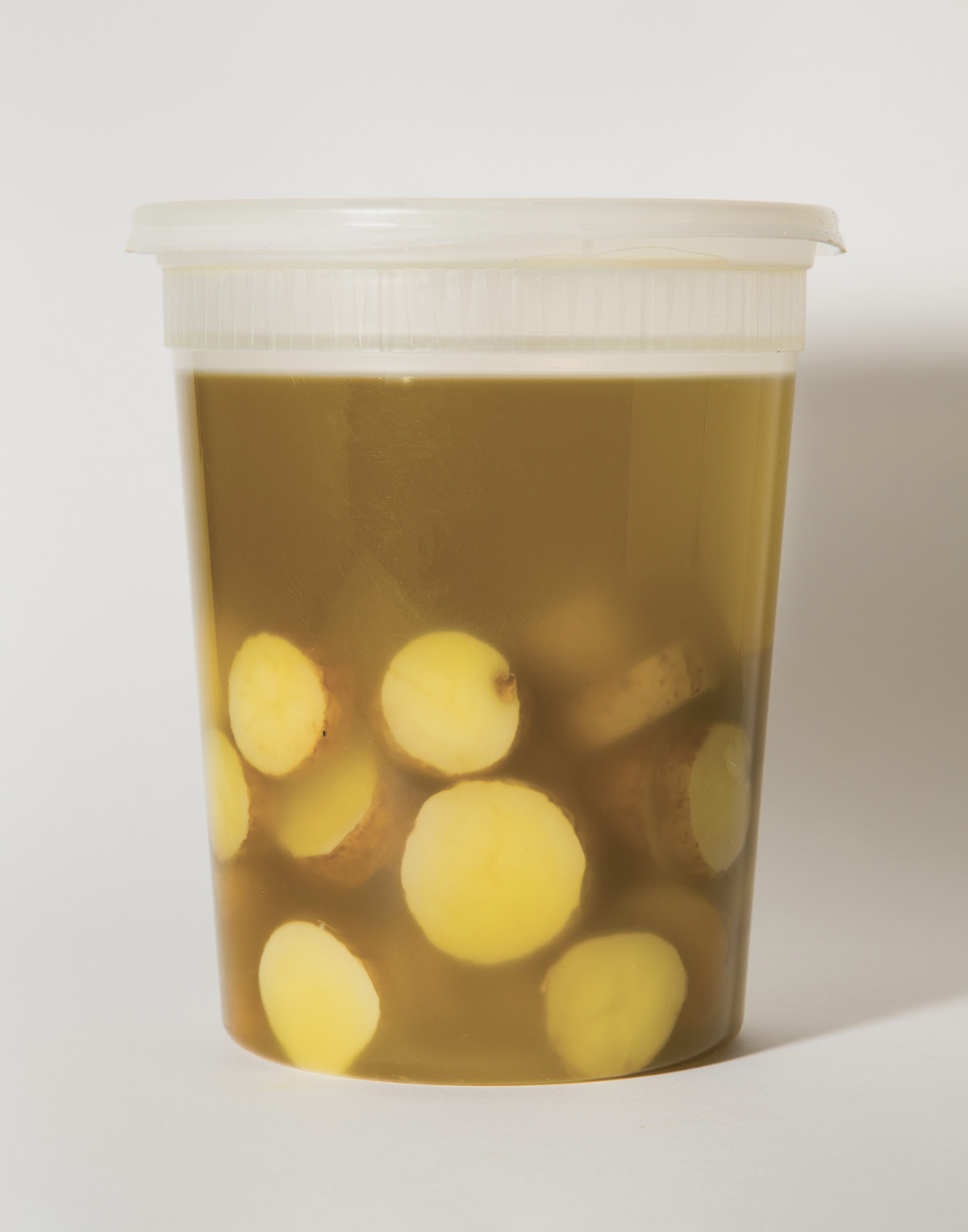
2 pounds Confit Potatoes (page 210; 2 tablespoons Old Bay seasoning added to the oil while cooking and salt reduced to 1 tablespoon)
Zest and juice of 2 lemons
2 teaspoons Old Bay seasoning
4 scallions, thinly sliced
2 cups crushed potato chips (preferably kettle cooked, very crunchy)
There are two versions below: Oreganato, which mimics a Long Island City old-school Italian American baked clam, and “New Bay,” which makes us oddly homesick for Baltimore, Maryland.
Heat a large skillet over medium-high heat. Add just a small splash of grapeseed oil and the potatoes (this may need to be done to two batches so as to not crowd the pan). Sear the potatoes, flipping with a spatula as needed, until crispy and browned on both sides. Transfer the hot potatoes to a large bowl. Toss with the lemon zest, lemon juice, Old Bay seasoning, and some pepper. Serve right away topped with a scattering of the scallions and a small handful of the crushed potato chips.
Serves 6
Grapeseed oil
2 pounds Confit Potatoes (page 210; with 4 garlic cloves and 2 fresh rosemary sprigs added to the oil while cooking)
Zest and juice of 2 lemons
2 tablespoons white wine syrup reduced by half
1 cup finely ground plain (unseasoned) bread crumbs
2 teaspoons dried oregano
1 teaspoon crushed red pepper flakes
½ cup fresh flat-leaf parsley, roughly chopped
Heat a large skillet over medium-high heat. Add just a tiny bit of grapeseed oil to the pan, then add the potatoes (in two batches, if necessary). Sear the potatoes, flipping with a spatula as needed, until crispy and browned on both sides. Transfer the hot potatoes to a large bowl. Toss the potatoes with the lemon zest, lemon juice, and reduced white wine syrup. Add a generous amount of salt and black pepper to the potatoes. In a small bowl, mix together the bread crumbs, oregano, and red pepper flakes. Sprinkle the seasoned bread crumbs, a few tablespoons at a time, over the hot potatoes. Gently toss the potatoes with the crumbs. Continue to add bread crumbs until the potatoes are coated in a thin layer, not clumpy but also not bare in any spots. Eat right away with some chopped parsley on top.
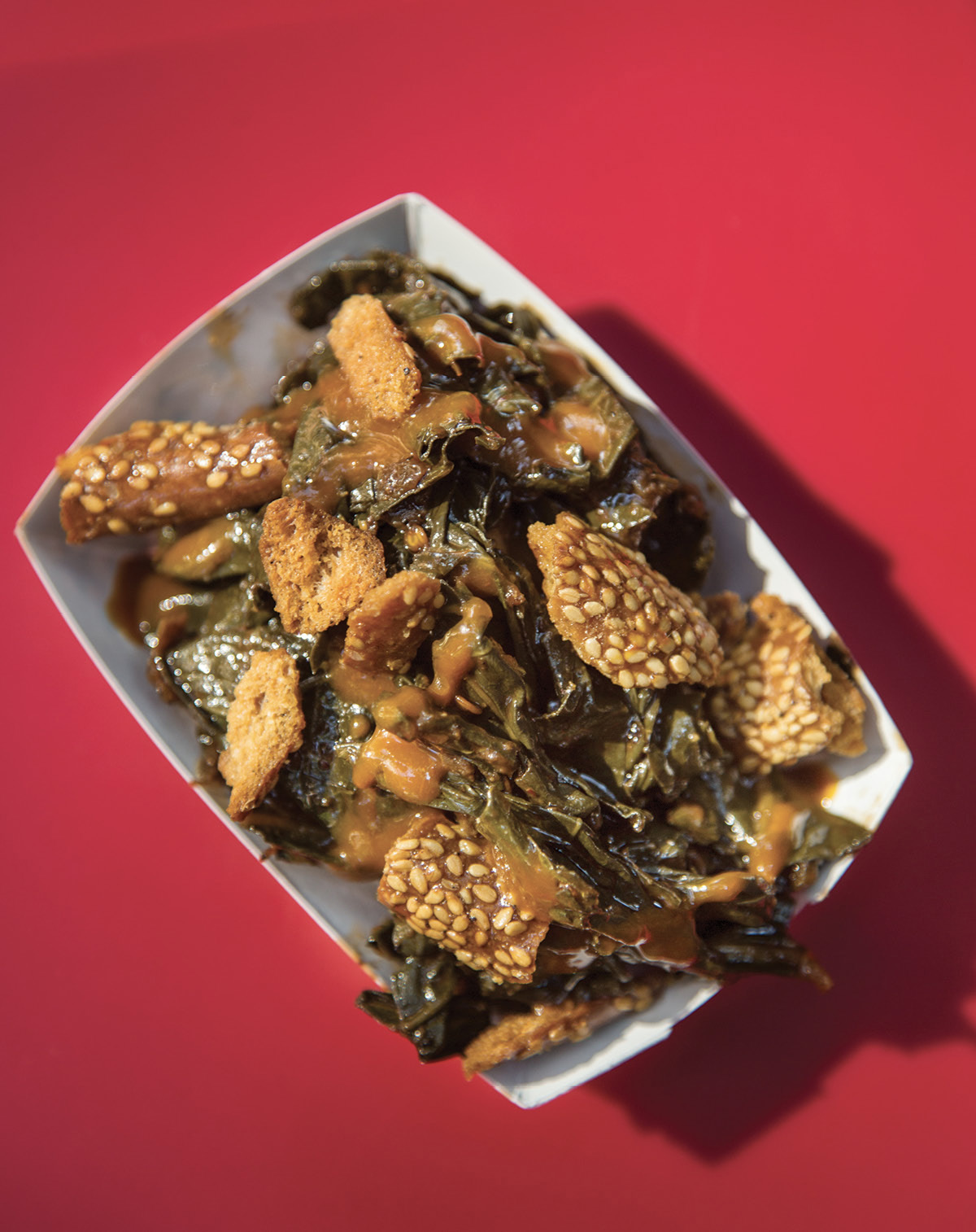
BRAISED COLLARD GREENS WITH HOT SAUCE AND HONEY
Collard greens seem to get no respect unless they have a ham hock or other pork-related seasoning buoy bobbing away in their Dutch oven. We strongly disagree with this. We are year-long champions of collard greens, and recognize both their humility and long-cooked chew as belonging to one of our favorite greens. If you are vegan and opposed to honey, maple syrup can slide right in without rumpling anyone’s ethical stance.
Serves 6
Extra virgin olive oil
2 medium yellow onions, cut into small dice
4 garlic cloves, sliced paper thin
2 tablespoons tomato paste
¼ cup cider vinegar
1 tablespoon raw sugar
½ cup water
1 large bunch collard greens, stemmed and sliced into 1-inch strips
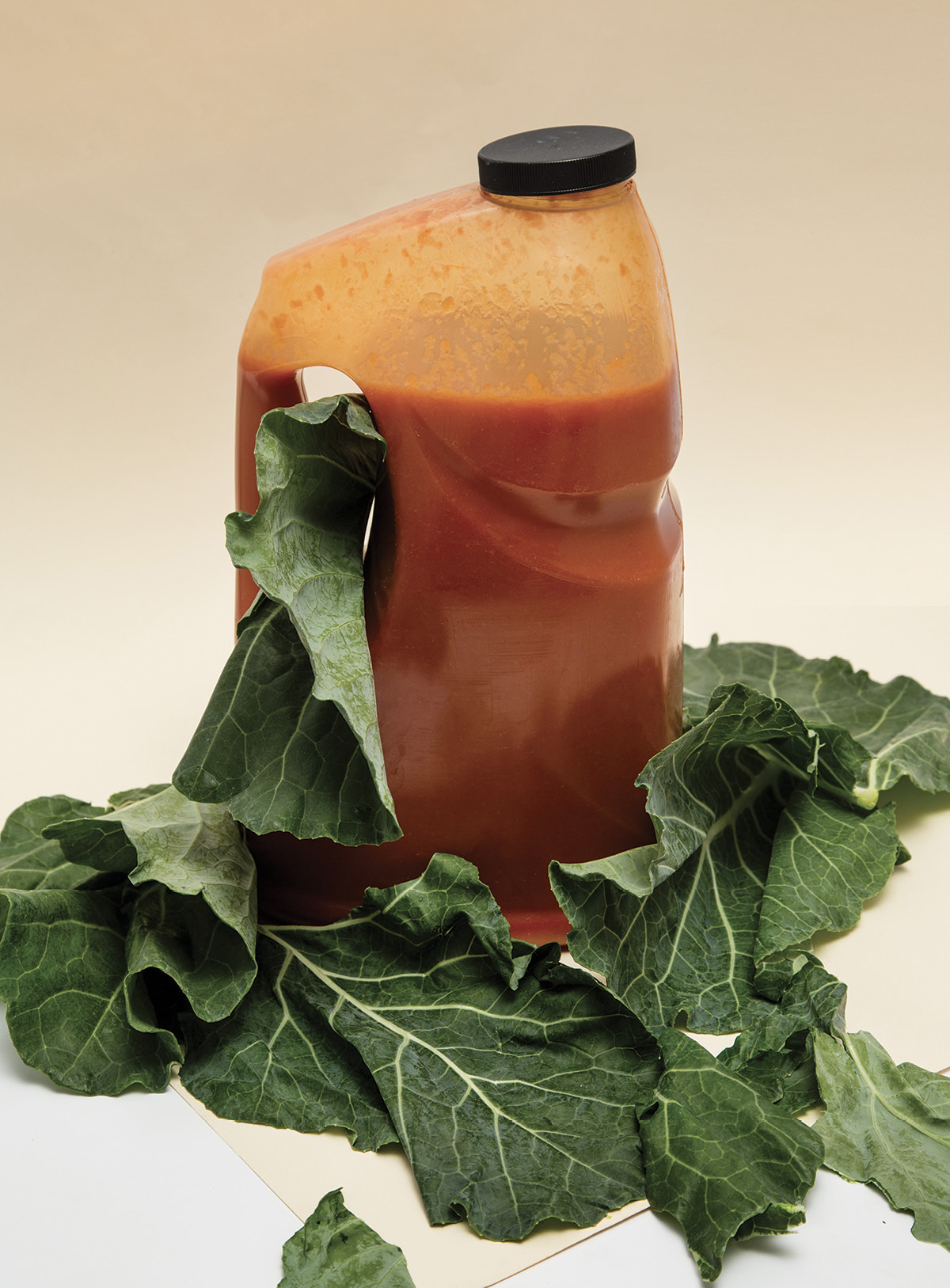
½ cup hot sauce (we like Frank’s RedHot for this)
2 tablespoons honey or maple syrup (for the vegan version)
Korean chile flakes (optional)
Seared Polenta Planks (see page 207; optional)
Toasted sesame breadsticks
Heat a couple tablespoons of olive oil in a deep pot over medium heat. Add the onions and a good pinch of salt and cook until the onions are totally soft and begin to take on some color, about 15 minutes. Add the garlic and cook for a few minutes more, until it just begins to become translucent. Add the tomato paste and raise the heat a little. Cook out the tomato paste until it turns into a deeper, more brown than red, color. Add the cider vinegar and raw sugar and scrape the bottom of the pot with some vigor to get any of the tomato paste and onions that may be stuck. Add the water and reduce the heat to medium-low. Add all the collard greens to the pot and cover with a lid. Let this go for a little while.
It’s a good time to mix up the sauce. In a small bowl, combine the hot sauce and honey (or maple syrup for vegan) until it is one homogeneous liquid. If you want it a bit more spicy, add some chile flakes.
Check the collards after 15 minutes and, using a spoon, stir so that the leaves on the bottom come to the top and everything gets cooked evenly. Replace the lid and cook for about another 15 minutes more. Once the greens are tender and have become a dark forest-green color they are done. Remove from the heat and season with salt and pepper. To serve, heap into a bowl, either on top of a plank of seared polenta or not, and drizzle with the sauce and top with toasted sesame breadsticks.
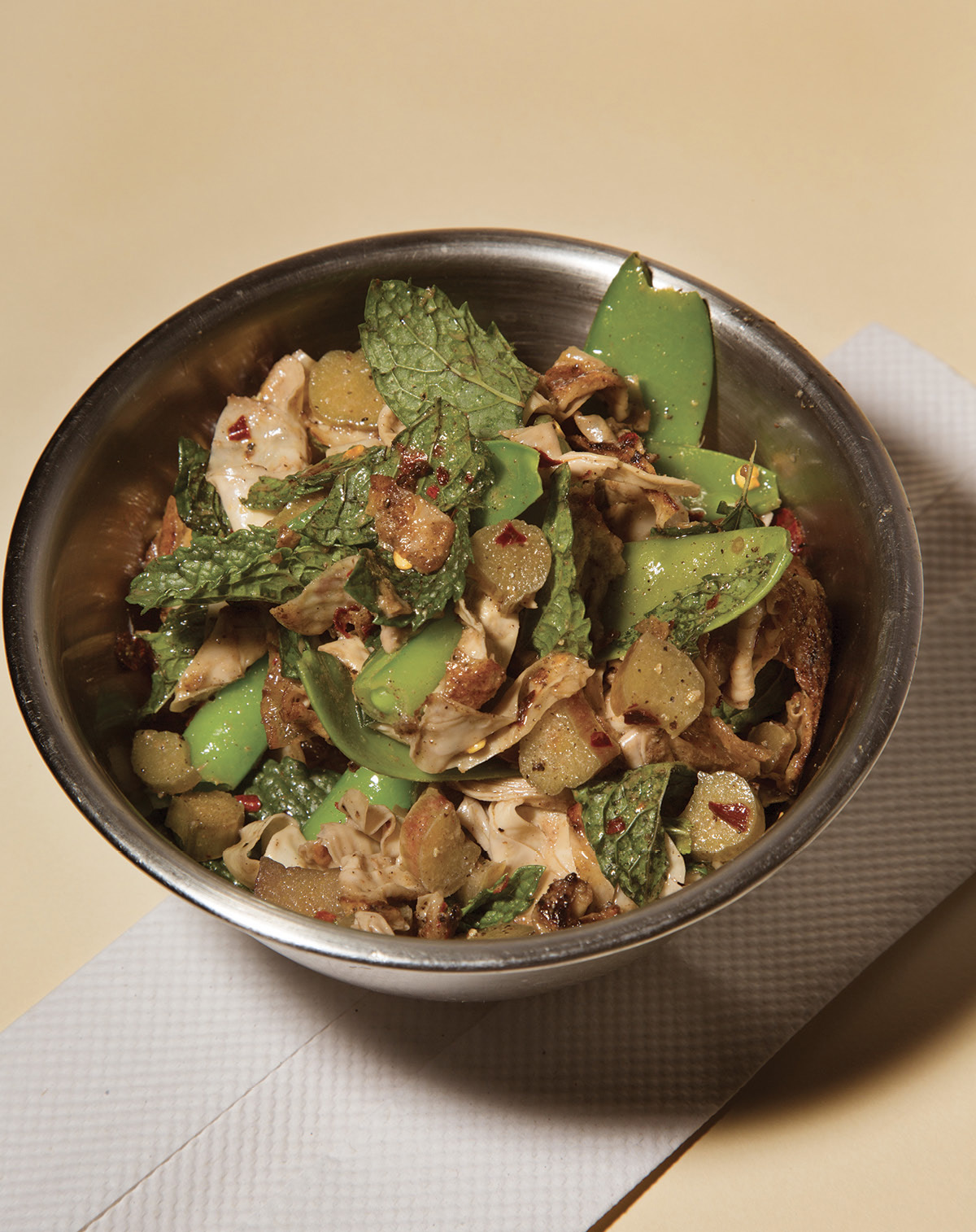
GRIDDLED YUBA WITH SNAP PEAS, RHUBARB, AND MINT
Scapece is an Italian-in-origin dish, and it is fantastic—usually utilizing shallow-oil-fried zucchini until it is fully engorged, along with some sort of allium element and a blanket of fresh mint. There are variations, of course. This is our clunky springtime version. Do it when the snap peas are plopped down right next to the rhubarb stalks in adjacent crates at the greenmarket. Yuba is around for slang and chew, but you can omit it, if you like.
Serves 6
2 rhubarb stalks, cut into ¼-inch slices
1 tablespoon cane sugar
2 tablespoons grapeseed oil
¼ cup ramps or scallions, cut into ¼-inch pieces
2 cups Marinated Yuba Strips (page 210)
1 cup snap peas or snow peas, blanched
4 tablespoons seasoned rice wine vinegar
1 teaspoon crushed red pepper flakes
1 bunch fresh mint
Nice olive oil (optional)
In a small bowl, toss the cut rhubarb with the sugar and a small pinch of salt. Let sit for at least 30 minutes; the sugar-salt combination will slightly cure the rhubarb.
In a large skillet, heat the grapeseed oil over medium-high heat until shimmering. Add the ramps and cook until they just begin to brown and soften. Add the yuba next and cook, stirring frequently, so the yuba ribbons separate and begin to brown and caramelize. Add the snap peas last and cook for just a minute more until they are heated through. Transfer everything from the skillet into a large bowl. Add the rhubarb, rice wine vinegar, red pepper flakes, and salt and black pepper. If it seems dry at all, add a small splash of nice olive oil. Tear in a generous amount of fresh mint, toss one last time to combine, and it’s ready to eat.
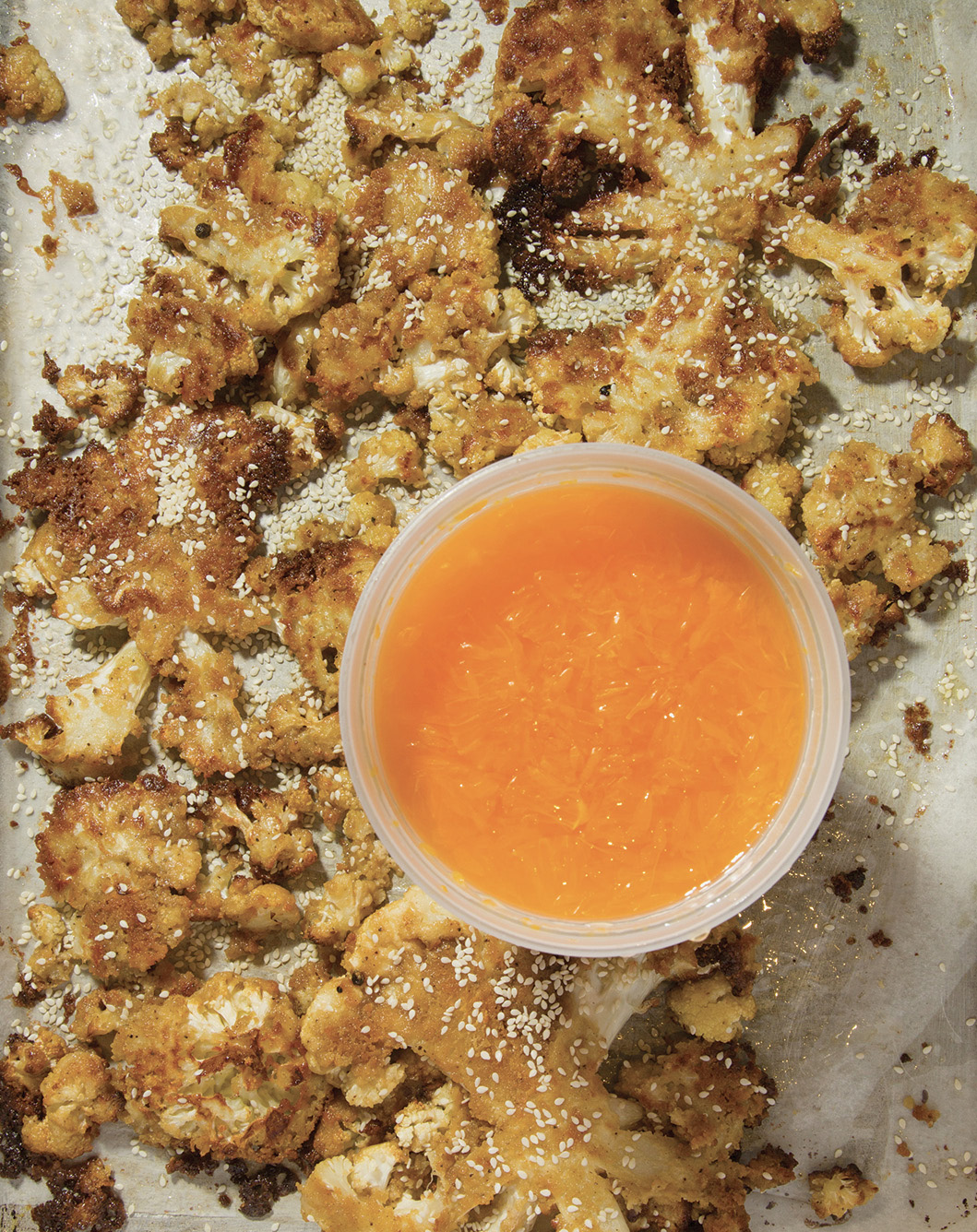
TAHINI-ROASTED CAULIFLOWER WITH TANGERINES AND HAZELNUTS
Consider this one a cautionary tale. Tahini allowed to breach oven doors and experience dry, hot heat does strange things. It Kentucky fries itself. It crisps and growls and cakes whatever it is cloaking in a nonoily sesame shroud. But don’t stop reading just yet. The addition of tangerine suprêmes will take control and vein this salad with Tang-like comeuppance. Crunchy hazelnuts are lurking around, hidden underneath the cruciferous parts, thankful to have not been asked to gianduia themselves into forced obsolescence.
Serves 6
½ cup tahini
¼ cup extra virgin olive oil
1 tablespoon maple syrup
2 teaspoons kosher salt
1 teaspoon freshly ground black pepper
1 large head cauliflower, cut into 1-inch slabs
½ cup sesame seeds, toasted
4 tangerines, zested, peeled, and separated into segments
1 Fresno chile, seeded and finely chopped
½ cup fresh cilantro, chopped
1 cup hazelnuts, toasted and crushed
Juice of 1 lemon
Preheat the oven to 475ºF. Lightly grease a baking sheet.
Mix together the tahini, olive oil, maple syrup, salt, and black pepper in a shallow bowl. Gently dip the cauliflower slabs, one at a time, into the tahini mixture, using your hands to thoroughly coat each piece. Place each slab on the baking sheet and roast in the oven until the cauliflower is browned and just tender, 15 minutes. Remove from the oven and immediately sprinkle with the toasted sesame seeds. Set aside.
In a small bowl, mix together the tangerine zest, chile, cilantro, hazelnuts, and lemon juice. To serve, place a piece or a few pieces of cauliflower on a plate, gently tear tangerine segments in half and scatter on top of the cauliflower, and sprinkle the zest-chile-cilantro-nut mixture over everything.
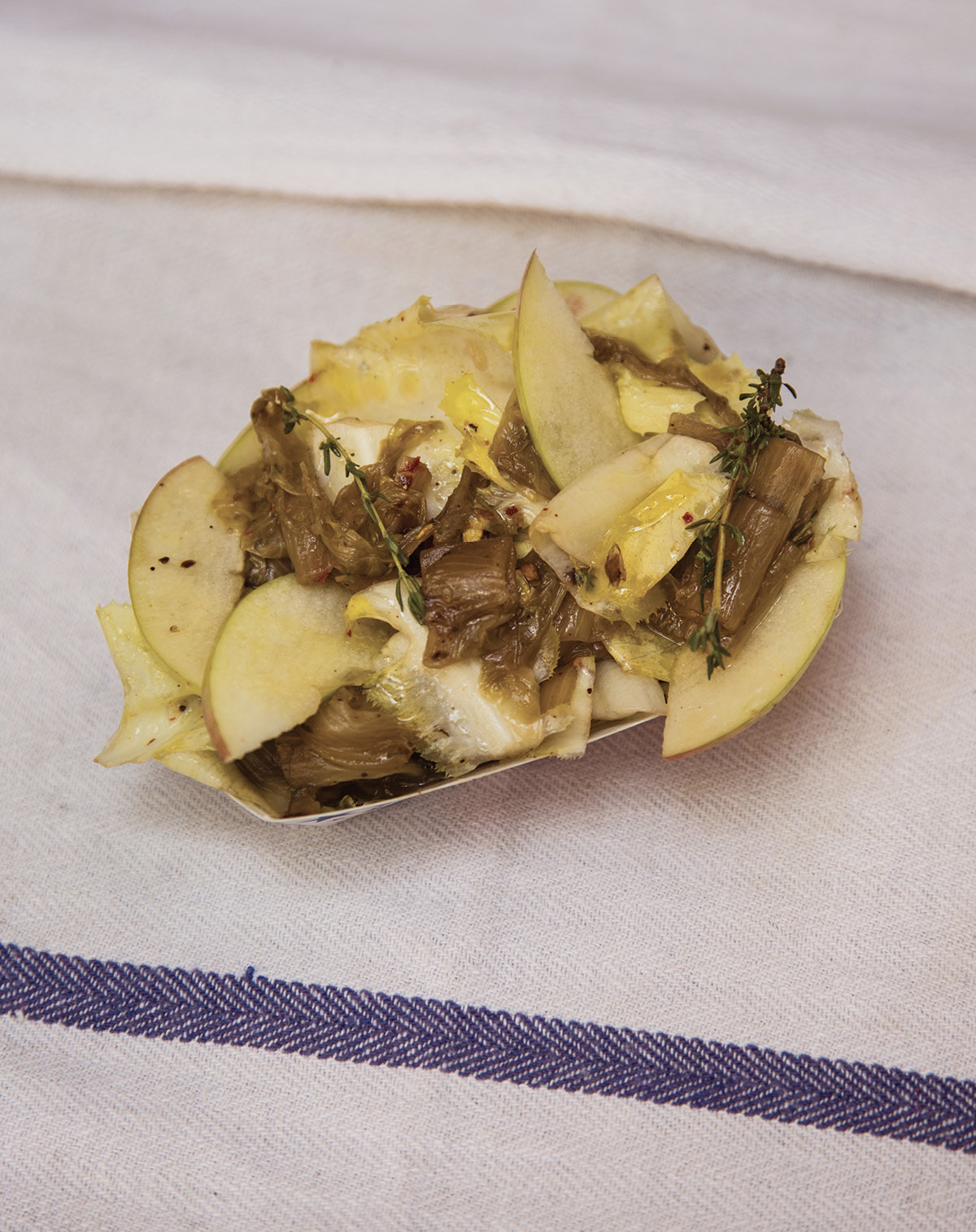
GARLIC-BRAISED ESCAROLE WITH APPLES AND THYME
Young market escarole is fantastic raw, the hearts that are pale greenish-white. But if you desire a succulent, chewy, and slippery alternative, stove-top-braise some in a big pot with a garlicky base of olive oil. Add the apples and preexisting mushrooms right before serving. There’s no actual crunchiness, but plenty of stick-to-your-ribs textural reward here.
Serves 6
Extra virgin olive oil
2 medium yellow onions, finely chopped
4 garlic cloves, sliced paper thin
2 tablespoons cider vinegar
½ cup water
3 heads escarole, cut into 1-inch pieces
4 fresh thyme sprigs, leaves picked
2 sweet and tart apples, sliced ¼-inch thick
½ cup Hammered Mushrooms (page 207), finely chopped
½ cup chopped fresh flat-leaf parsley
Heat a few tablespoons of olive oil in a large deep pot over medium-high heat and add the onions and a large pinch of salt. Cook, stirring occasionally, until browned and tender, about 15 minutes. Add the garlic and cook for just a minute more. Stir in the cider vinegar, being sure to scrape the bottom of the pot well. Let the vinegar cook down for about a minute, then add the water and all the escarole. Reduce the heat to low and cover the pot. Cook, checking and stirring every 10 minutes or so, until all the escarole has just wilted. Taste for salt and add pepper and the thyme leaves. When ready to eat, drain off any excess liquid from the warm escarole and toss it with the apples and mushrooms. Finish with the parsley on top.
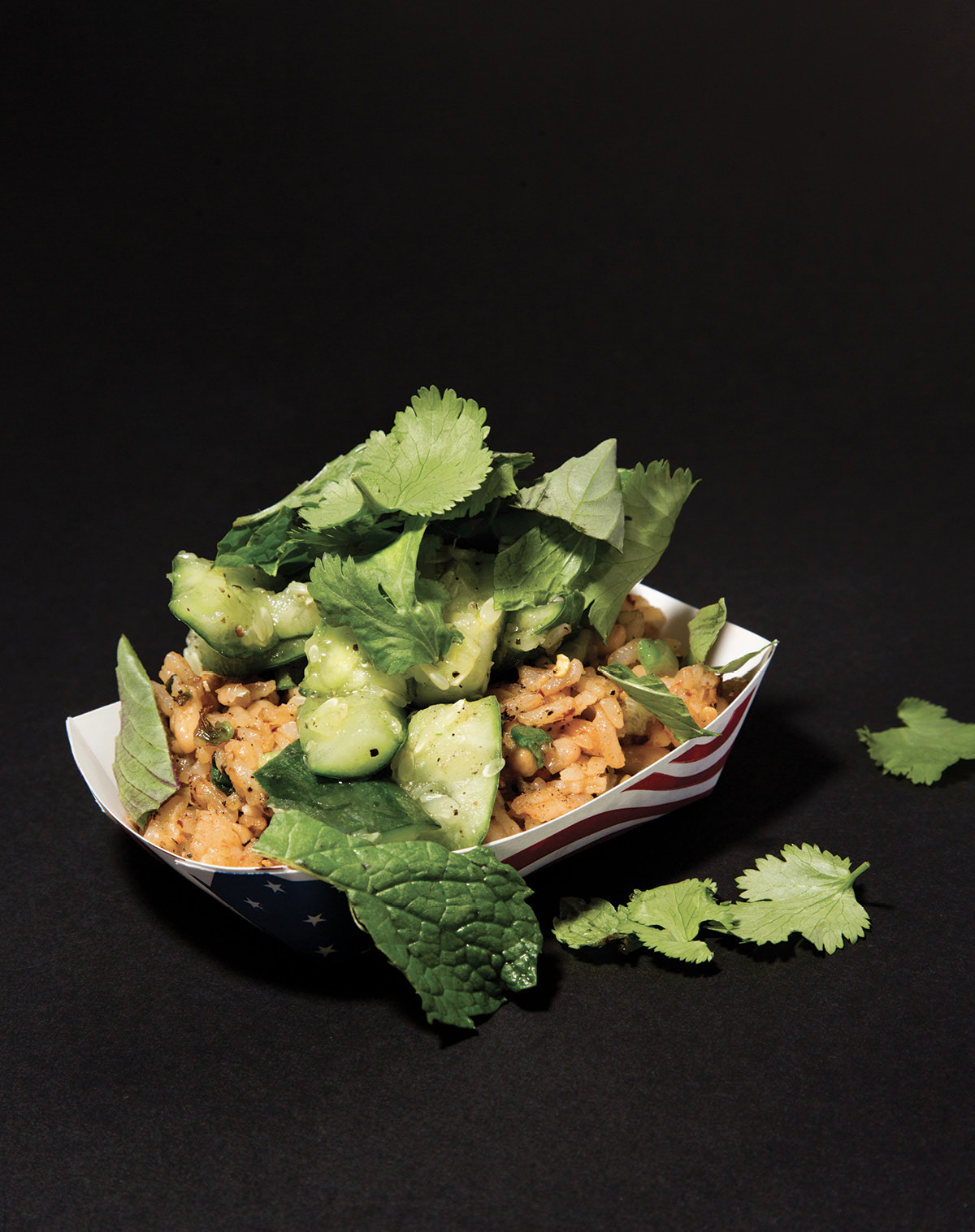
Cooking jasmine rice with a few star anise pods and some other bonus seasoning will turn this floral-yet-tame grain exciting. We realized after cooking rice like this a few times it had an almost pho-like flavor profile. We had some beans quarted up in the fridge, so we sent our facilities manager to the August greenmarket to grab Thai basil, mint, and cilantro. We smashed up some chilled cucumbers for a temperature contrast. We mixed it all together and voilá. This one is great the next day, straight out of the Tupperware, for lunch.
Serves 4 to 6
1 tablespoon hot chile sauce
1 tablespoon seasoned rice wine vinegar
2 tablespoons tamari
1 tablespoon extra virgin olive oil
4 star anise
2 cups jasmine rice
1 scallion, shredded
2 cups cooked black-eyed peas, rice beans, or other quick-cooking small bean
Extra virgin olive oil
Seasoned rice wine vinegar
1 teaspoon Korean chile flakes
½ cup Spicy Mayo (page 212)
2 cups smashed cucumbers (see page 72)
½ cup fresh mint
½ cup fresh Thai basil
½ cup fresh cilantro
To cook the rice, bring 3½ cups water to a boil in a large pot. Add the chile sauce, rice wine vinegar, tamari, olive oil, and star anise. Rinse the jasmine rice in a colander until the water runs clear. Add to the boiling seasoned water. Bring back to a boil and then drop to a simmer, cover, and cook for exactly 8 minutes (set a timer). Remove from the heat (keep the lid on) and let the residual heat carry over and complete the cooking for 15 minutes (set a timer). Spread out the warm rice on a baking sheet to cool. Pick out all the star anise pods.
To serve, griddle the scallions with a little olive oil in a sauté pan until slightly charred, about 6 minutes. Add the beans and part of the cooled rice to create a proper proportion of beans to rice. Cook, flipping around, until the rice gets warmed and speckled with brown flecks. Scrape into a mixing bowl and season to taste with salt, pepper, olive oil, rice wine vinegar, and chile flakes. Portion into bowls and top with the spicy mayo, smashed cucumbers, and equal parts of all of the herbs. Serve immediately.
Table of contents
- Cover
- Title
- Contents
- Introduction
- A Few Notes on These Recipes
- Sandwiches
-
Cool Salads
- Burnt Broccoli Salad
- Tahini Ranch Romaine Salad
- Caraway Slaw
- Chicories Salad
- Green Brown Rice with Yellow Beets
- Chopped Salad
- Wedgeless Wedge Salad
- Home-Style Potato Salad
- Corn and Tomatoes with Bruised Basil and Olive Oil Croutons
- Ice-Cold Herbed Melon and Cucumber Salad
- Fennel and Celery Salad with Spicy Peanut Sauce
- Okra Rice Salad
- Roasted Cauliflower with Tamarind, Shiso, and Peanuts
- Raw Swiss Chard Salad
- Iced and Smashed Cucumber Salad
- Vegetable Salad
- Sweet-and-Sour Red Beets with Cream Cheese and Fried Pretzels
- Kohlrabi Slaw
- Wild Rice Salad with Candied Hibiscus
- Stuffed Cabbage Salad
- Half-Wilted Escarole with Corn Bread and Roasted Apricots
- Peas and Pesto
- Roasted Rutabaga with Brown Rice and Pomegranate Molasses
- Bitter Greens with Grapefruit, Re-Toasted Corn Chips, and Halloumi
-
Warm Vegetables
- Griddled Broccoli Rabe
- Stuffed Green Peppers with Coconut and Iceberg
- Crunchy Potatoes
- Bean Toast
- Beer Batter Market Pancakes
- Loaded White Sweet Potato
- Roasted Orange Sweet Potato with Olive-Raisin Chutney
- Salt-and-Vinegar String Beans
- Kelp and Vegetable Scampi
- BBQ Baked Gigante Beans with Polenta and Coleslaw
- BBQ Carrots with Cashew Cream and Corn Chips
- Confit Potatoes
- Braised Collard Greens with Hot Sauce and Honey
- Griddled Yuba with Snap Peas, Rhubarb, and Mint
- Tahini-Roasted Cauliflower with Tangerines and Hazelnuts
- Garlic-Braised Escarole with Apples and Thyme
- Fried Rice and Beans
- Soups and Stews
- Sweets
-
Pantry Recipes
- Pump Cheese
- Pickled Onions and Other Alliums
- Fried Salt-and-Vinegar Wonton Wrappers
- Chile Oil
- Pickled Golden Raisins
- Cashew Cream
- Hammered Mushrooms
- Polenta Planks
- Cheesy Brined Tofu
- Pastrami Tofu
- Crunchy Potatoes
- Confit Potatoes
- Marinated Yuba Strips
- Brown Rice
- Corn Bread
- Chickpea Mayo
- Special Sauce
- Spicy Mayo
- Acknowledgments
- Glossary
- Index
- Copyright